Kerala High Court to Watch JSK – Janaki Vs State of Kerala Film on July 5

Below is an extensive (~3 000‑word) feature-style write‑up exploring the unfolding Kerala High Court saga around the film JSK: Janaki v/s State of Kerala, its thematic significance, legal dynamics, censorship debate, industry reactions, and wider implications.
📽️ Introduction & Context
The Malayalam legal drama “JSK: Janaki v/s State of Kerala” (abbreviated JSK), starring Union Minister Suresh Gopi and Anupama Parameswaran, focuses on a rape survivor, Janaki, seeking justice in the Kerala courts deccanherald.com+15en.wikipedia.org+15hindustantimes.com+15. Directed by Pravin Narayanan and produced by Cosmos Entertainments, the film was slated for release on 27 June 2025 timesofindia.indiatimes.com+3en.wikipedia.org+3deccanchronicle.com+3.
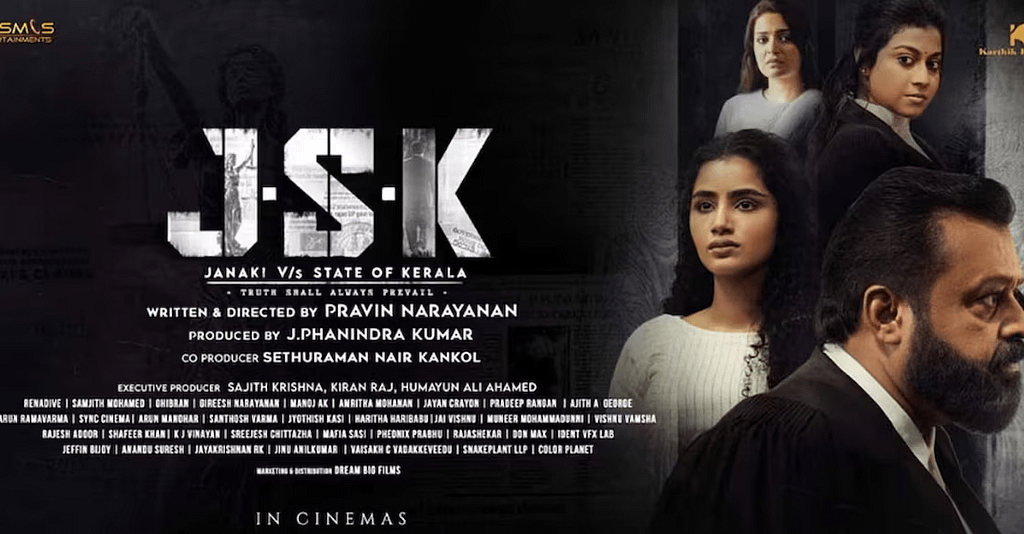
However, weeks before its theatrical premiere, the certification process was delayed. The Central Board of Film Certification (CBFC), citing guidelines under Section 5B(2) of the Cinematograph Act, raised objections—not about the film’s mature content, but specifically about the use of the name “Janaki,” a name also associated with Goddess Sita lawchakra.in+10hindustantimes.com+10indianexpress.com+10.
🏛️ The Legal Dispute
1. CBFC’s Objection
The Revising Committee of CBFC issued a show-cause notice demanding removal of the name “Janaki” from both the title and dialogues, arguing its usage in context of sexual violence could offend religious sentiments under Guideline 2(xii) livelaw.in+15hindustantimes.com+15onmanorama.com+15.
2. Filmmakers Push Back
Producers argued there was no formal explanation for the objection and that prior films like “Janaki Jane” (2023) were certified without issue onmanorama.com+2en.wikipedia.org+2timesofindia.indiatimes.com+2. They emphasized the name is central to the narrative of a victim fighting for justice, not a character portrayed negatively.

3. High Court Intervention
Cosmos Entertainment filed a writ petition in the Kerala High Court, seeking timely certification. Justice N. Nagaresh raised fundamental questions: “What is wrong with the name Janaki? … Janaki is Seeta.… Is the CBFC now dictating which names to use and stories to tell?” english.mathrubhumi.com+1timesofindia.indiatimes.com+1indianexpress.com+14hindustantimes.com+14timesofindia.indiatimes.com+14.
Rejecting the idea of blind deference, the court demanded CBFC provide valid reasoning on how the name violates religious sensitivities indianexpress.com+13english.mathrubhumi.com+13timesofindia.indiatimes.com+13.
🎬 Courtroom Screening
To inform its decision, the Court scheduled an in-court screening for 5 July 2025, to take place at 10 am at Lal Media, Palarivattom. Representatives from both filmmakers and CBFC were invited. The next hearing was set for 9 July 2025 hindustantimes.com+4english.metrovaartha.com+4newindianexpress.com+4.
🛑 Key Legal & Policy Questions
- Artistic Freedom vs Religious Sensitivity
- The Court noted Indian names often draw from religious figures—e.g., Seeta, Ram, Krishna, Ahammed, Antony. Unless used defamatory or contemptuously, their usage shouldn’t be restricted timesofindia.indiatimes.comtimesofindia.indiatimes.com.
- Justice Nagaresh asserted that naming a rape survivor Janaki firmly falls within protected creative expression newindianexpress.com+14hindustantimes.com+14onmanorama.com+14.
- Scope of CBFC Authority
- The Court challenged whether CBFC had the mandate to dictate character names or storylines, pushing them to clarify the basis for censorship timesofindia.indiatimes.comen.wikipedia.org+1timesofindia.indiatimes.com+1.
- CBFC Precedent and Flawed Reasoning
- The fact that “Janaki Jane” passed certification in 2023 undermines CBFC’s claim timesofindia.indiatimes.comlivelaw.in+14en.wikipedia.org+14timesofindia.indiatimes.com+14.
- The Board lacked a reasoned written order—an obligation under Rule 25 of the Cinematograph Rules—raising constitutional due process issues timesofindia.indiatimes.com+2english.metrovaartha.com+2timesofindia.indiatimes.com+2.
- Absence of Appeal Redressal
- With the Film Certification Appellate Tribunal (FCAT) abolished in 2021, petitioners have limited recourse—CBFC’s decisions are largely unreviewable deccanherald.comtimesofindia.indiatimes.com.
🎭 Industry Reaction & Public Debate
The CBFC action triggered strong backlash across Malayalam cinema:
- FEFKA (Film Employees Federation Kerala) criticized the interference as an “attack on creative freedom” en.wikipedia.org.
- AMMA, Kerala Film Producers’ Association, and others demonstrated at the CBFC Thiruvananthapuram office, discarding scissors in protest en.wikipedia.org.
- Cultural Affairs Minister Saji Cherian condemned the CBFC’s stance as “completely unacceptable” en.wikipedia.org.
- Director Kamal likened the demand to Emergency-era censorship .
🌍 Comparative & Precedent Perspective
- In Bombay HC’s handling of “Jolly LLB,” courts sometimes screened disputed films before decisions timesofindia.indiatimes.com. Kerala HC’s screening of JSK aligns with that practice.
- The argument resonates with constitutional free speech jurisprudence in India. Courts have historically protected artistic and expressive freedom while allowing limited regulation when harm is demonstrable.
🧭 Potential Outcomes & Implications
- HC Upholds Filmmaker’s Rights
- CBFC might be ordered to drop the name-change condition.
- Certification could be granted (likely U/A or A), allowing July release.
- HC Partially Agrees with CBFC
- If Court determines the use offends sensitivity, it may ask for disclaimers or slight name modifications—though unlikely based on remarks.
- Delays Continue
- Release gets pushed further, harming producers financially.
- Sparks broader debate on judicial oversight vs censorship independence.
Broader Cultural & Legal Impact
- Could set precedent that character names alone cannot trigger censorship unless they insult or defame a religious figure.
- May incentivize CBFC to refine written, reasoned orders and bolster transparency.
- Sparks national discussion on creative rights, especially in handling sensitive themes like sexual violence.
🧾 About the Film: JSK – Janaki v/s State of Kerala
| Element | Details |
|---|---|
| Director/Writer | Pravin Narayanan indianexpress.com+14en.wikipedia.org+14deccanherald.com+14timesofindia.indiatimes.com+3onmanorama.com+3deccanchronicle.com+3english.metrovaartha.comonmanorama.com+2hindustantimes.com+2timesofindia.indiatimes.com+2 |
| Producer | J. Phanindra Kumar (Cosmos Entertainments) |
| Cast | Suresh Gopi (Adv. David Donovan), Anupama Parameswaran (Janaki), others |
| Genre | Courtroom drama (runtime ~154 min) |
| Plot | A survivor’s legal fight post-trauma, with Gopi representing her |
| Release History | Original June 20 launch delayed to June 27, then blocked by CBFC |
⏳ Timeline of Events
- November 2022 – Filming commenced timesofindia.indiatimes.com+11en.wikipedia.org+11livelaw.in+11.
- June 2025 – CBFC delays certification, issues show-cause notice on name-based objection english.mathrubhumi.com+15en.wikipedia.org+15timesofindia.indiatimes.com+15.
- 27 June – HC challenges CBFC’s reasoning, summons written explanation timesofindia.indiatimes.com+4en.wikipedia.org+4timesofindia.indiatimes.com+4.
- 30 June – Protest by film bodies english.mathrubhumi.com+12en.wikipedia.org+12english.metrovaartha.com+12.
- 2 July – HC schedules special screening and sets next hearing for 9 July newindianexpress.com.
🔍 Final Word
The Kerala High Court’s decision to screen “JSK” on 5 July is more than an operational step—it underscores the crucial intersection of free expression, artistic autonomy, religious sensitivity, and judicial oversight in Indian cinema. Justice Nagaresh’s probing stance highlights the tension between creative intent and institutional control.
The July 5 screening and subsequent hearing on July 9 will likely clarify the legal stance on some of these questions. Ultimately, this could set a landmark precedent for future censorship disputes—especially on narrative naming, content portrayal, and openness in regulatory reasoning.
If you’d like deeper coverage—analysis of legal judgments, comparison with other censorship controversies (like Padmaavat, PK), reactions from Suresh Gopi or producer statements—just say the word!
Next Steps
- Watch the film’s July 5 screening in court.
- Await Kerala HC’s verdict on certification and name-change demands.
- Explore broader implications for creative regulation in Indian cinema.
Let me know if you want summaries of the court order text, legal precedents cited in hearings, or opinions from film fraternity insiders!