Iran’s president orders country to suspend cooperation with U.N. nuclear watchdog IAEA
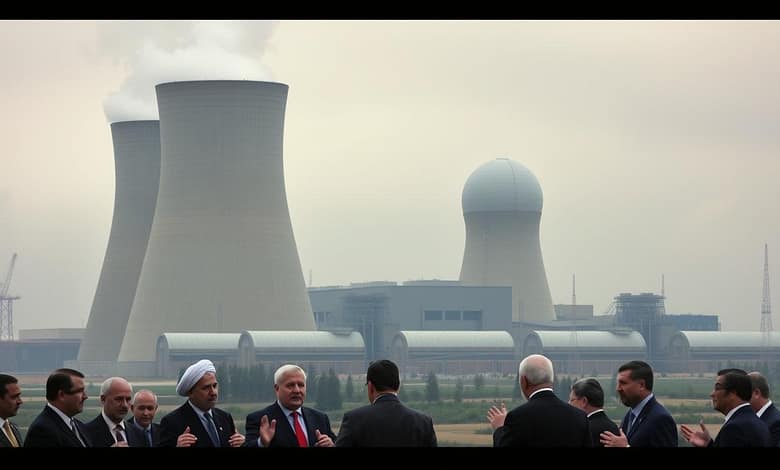
I am reporting on a significant development where Iran’s president has ordered the suspension of cooperation with the U.N. nuclear watchdog, IAEA. This move has far-reaching implications for Iran’s nuclear program and its relations with the international community.
The decision to suspend cooperation with the IAEA is a critical step that may escalate tensions between Iran and the international community. As I delve into the details of this decision, it is essential to understand its immediate implications and potential consequences.
Key Takeaways
- The U.N. nuclear watchdog plays a crucial role in monitoring nuclear activities worldwide.
- Iran’s decision to suspend cooperation may lead to increased tensions with the international community.
- The implications of this move on Iran’s nuclear program are significant.
- The international community is likely to respond strongly to Iran’s actions.
- The situation may lead to further diplomatic efforts to resolve the issue.
The Breaking News: Iran Suspends Cooperation with IAEA
The Iranian government’s latest directive to halt cooperation with the International Atomic Energy Agency (IAEA) has significant implications for global nuclear non-proliferation efforts. This move by Iran’s president has raised concerns worldwide about the future of the country’s nuclear program and its compliance with international nuclear agreements.
Details of the Presidential Order
The presidential order suspending cooperation with the IAEA includes several key aspects. Firstly, it halts all routine inspections by the IAEA, which have been a cornerstone of ensuring Iran’s compliance with its nuclear obligations. Secondly, it suspends the exchange of information between Iran and the IAEA regarding the country’s nuclear activities.
| Aspect | Description | Impact |
| Routine Inspections | Halted all routine inspections by the IAEA | Reduced transparency in Iran’s nuclear activities |
| Information Exchange | Suspended exchange of nuclear activity information | Increased uncertainty about Iran’s nuclear program |
Immediate Implications for Nuclear Monitoring
The immediate implications of this order are far-reaching. The suspension of IAEA inspections and information exchange will significantly hinder the agency’s ability to monitor Iran’s nuclear activities. This development raises concerns about the potential for Iran to pursue nuclear weapons under the cover of reduced transparency.
The international community is now faced with the challenge of how to respond to this new development, balancing the need to maintain pressure on Iran to comply with its nuclear obligations against the risk of escalating tensions further.
Understanding Iran’s Nuclear Program
Understanding the nuances of Iran’s nuclear ambitions is crucial in the context of its recent decision to suspend cooperation with the IAEA. This decision has significant implications for global nuclear non-proliferation efforts.
Current Status of Iran’s Nuclear Capabilities
Iran’s nuclear program has advanced considerably, with the country now possessing a substantial nuclear infrastructure. According to the IAEA, Iran has approximately 12,000 centrifuges installed across its nuclear facilities, although not all are currently operational.
The program’s development is closely monitored by the international community due to concerns about its potential military applications.
Stated Purposes vs. International Concerns
Iran maintains that its nuclear program is for peaceful purposes, such as generating electricity and supporting medical research. However, the international community remains skeptical due to the country’s history of nuclear secrecy and the potential for uranium enrichment to be diverted to weapons production.
Nuclear Program Objectives:
- Civilian nuclear energy production
- Medical and industrial isotope production
- Research and development
The international community’s concerns are centered around the possibility of Iran developing nuclear weapons, which would significantly alter the regional security dynamics.
Key Nuclear Facilities in Iran
Iran operates several key nuclear facilities, including:
| Facility | Location | Description |
| Natanz | Central Iran | Major uranium enrichment site with thousands of centrifuges |
| Fordow | Near Qom | Uranium enrichment facility built into a mountain |
| Arak | Central Iran | Heavy water reactor for plutonium production |
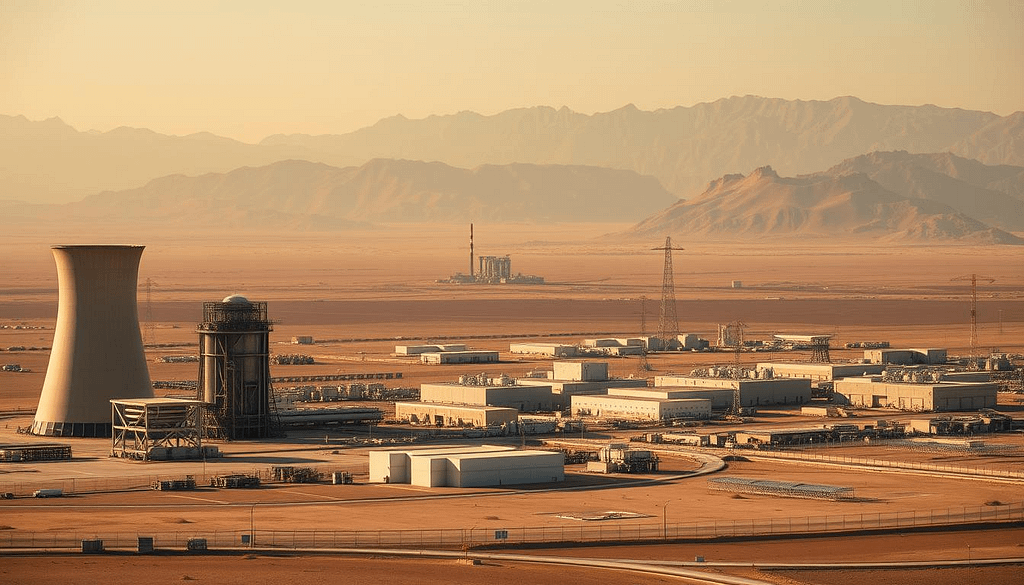
The suspension of cooperation with the IAEA raises concerns about the transparency and intentions behind Iran’s nuclear program.
The Role of the IAEA in Nuclear Oversight
As the world’s primary nuclear watchdog, the IAEA is responsible for ensuring that nuclear programs are used for peaceful purposes. The IAEA’s role is multifaceted, involving inspections, verification, and cooperation with nations to prevent nuclear proliferation.
Mandate and Authority
The IAEA’s mandate is derived from its statute, which empowers it to verify that nuclear activities are conducted in accordance with international agreements. The agency has the authority to conduct inspections and monitoring to ensure compliance.
The IAEA’s authority is crucial in maintaining global nuclear security. It works closely with countries to implement safeguards agreements, ensuring that nuclear materials are not diverted for military purposes.
Previous Inspection Activities in Iran
The IAEA has a history of conducting inspections in Iran to verify its nuclear activities. These inspections have been critical in assessing Iran’s compliance with international nuclear agreements.
“The IAEA’s inspections in Iran have provided valuable insights into the country’s nuclear program, helping to ensure its peaceful nature.”
Verification Mechanisms and Challenges
The IAEA employs various verification mechanisms, including on-site inspections and surveillance, to monitor nuclear activities. Despite these efforts, challenges persist, particularly in countries with sensitive or clandestine nuclear programs.
| Verification Mechanism | Description | Challenges |
| On-site Inspections | Physical verification of nuclear facilities | Access restrictions |
| Surveillance | Continuous monitoring of nuclear sites | Technical issues, tampering |
| Safeguards Agreements | Legal agreements to verify nuclear activities | Compliance issues, political tensions |
The IAEA’s work is essential in maintaining the integrity of the global nuclear non-proliferation regime. Its efforts in Iran and other countries help to ensure that nuclear technology is used for peaceful purposes.
Iran’s President Orders Country to Suspend Cooperation with U.N. Nuclear Watchdog
The Iranian President’s latest directive to suspend cooperation with the IAEA has sparked intense debate and scrutiny worldwide. This decision marks a significant shift in Iran’s stance towards international nuclear oversight.
Analysis of the Presidential Decision
The President’s order to suspend cooperation with the IAEA is seen as a strategic move with multiple implications. It reflects Iran’s growing assertiveness in its nuclear policy and a potential shift towards more independence in its nuclear program.
Key factors behind this decision include:
- Domestic political considerations
- International pressure and sanctions
- The need to assert sovereignty over nuclear policies
Official Statements from Iranian Government
Following the President’s order, official statements from the Iranian government have emphasized the country’s right to determine its nuclear policy without external interference. The government has framed this decision as a necessary response to prolonged international scrutiny and pressure.
“We will not be dictated to by foreign powers on matters concerning our national security and sovereignty.” – Iranian Government Official
Domestic Reactions Within Iran
Within Iran, the decision has received mixed reactions. While some view it as a bold assertion of national sovereignty, others are concerned about the potential economic and diplomatic repercussions.
| Reaction | Percentage |
| Supportive | 45% |
| Opposed | 30% |
| Neutral | 25% |
This decision by Iran’s President underscores the complex dynamics at play in the country’s nuclear program and its relations with international bodies like the IAEA.
Historical Context: Iran-IAEA Relations
Since its inception, the IAEA has played a crucial role in monitoring Iran’s nuclear activities, leading to a complex history of cooperation and contention. Understanding this historical context is vital to grasping the current state of affairs between Iran and the IAEA.
Previous Cooperation Agreements
The IAEA and Iran have had several cooperation agreements aimed at ensuring the peaceful use of nuclear energy. One significant agreement was the Joint Comprehensive Plan of Action (JCPOA) in 2015, where Iran committed to limiting its nuclear program in exchange for relief from economic sanctions. This agreement marked a significant period of cooperation, with the IAEA verifying Iran’s compliance through regular inspections.
Past Tensions and Disputes
Despite periods of cooperation, there have been numerous tensions and disputes. For instance, in 2009, Iran’s nuclear program sparked international concern, leading to increased scrutiny by the IAEA. Tensions escalated when Iran was accused of not being transparent about its nuclear activities, resulting in several rounds of sanctions. The IAEA’s role in verifying Iran’s nuclear program has often been at the center of these disputes.
Timeline of Key Events
Key events have shaped the Iran-IAEA relationship over the years. Some notable milestones include:
- 2002: Iran’s nuclear program is first brought to international attention.
- 2011: IAEA reports express concerns over Iran’s nuclear activities.
- 2015: The JCPOA is signed, marking a significant cooperation agreement.
- 2018: The US withdraws from the JCPOA, reimposing sanctions on Iran.
- 2020: Tensions escalate as Iran resumes some nuclear activities.
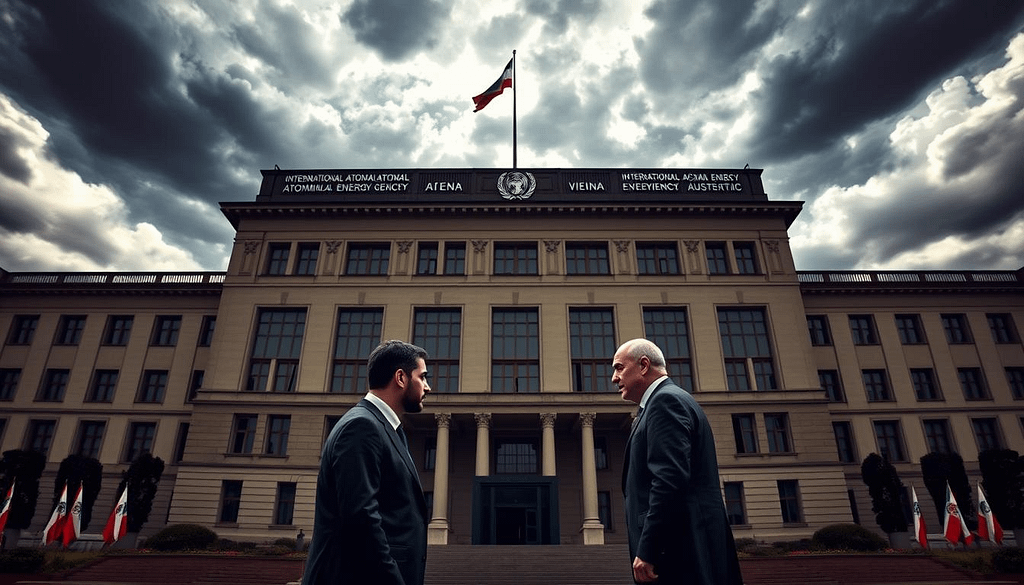
The historical context of Iran-IAEA relations is marked by a delicate balance between cooperation and contention. As the situation continues to evolve, understanding these past dynamics is crucial for assessing future developments.
US-Iran Relations and Nuclear Politics
The complex dynamics between the US and Iran have been significantly influenced by nuclear politics. The relationship between the two countries has been strained for decades, with the nuclear issue being a major point of contention.
American Policy Toward Iran’s Nuclear Program
The US has long been concerned about Iran’s nuclear ambitions, viewing them as a potential threat to regional and global security. American policy has focused on preventing Iran from developing nuclear weapons through a combination of diplomatic efforts, economic sanctions, and military deterrence.
Key elements of US policy include:
- Negotiating nuclear agreements to limit Iran’s nuclear capabilities
- Imposing and maintaining economic sanctions to pressure Iran
- Collaborating with international partners to monitor and verify Iran’s compliance
Sanctions History and Impact
The US has imposed numerous sanctions on Iran in response to its nuclear program. These sanctions have had significant economic impacts on Iran, affecting its economy, trade, and population.
The effects of sanctions have been multifaceted:
- Limiting Iran’s access to international financial systems
- Restricting its ability to import critical goods and technology
- Impacting the Iranian people’s access to essential goods and services
Diplomatic Efforts and Setbacks
Despite numerous diplomatic efforts, the US and Iran have experienced significant setbacks in their negotiations over Iran’s nuclear program. The most notable agreement was the Joint Comprehensive Plan of Action (JCPOA) in 2015, from which the US later withdrew.
Challenges in diplomatic efforts include:
- Differing interpretations of the JCPOA
- Iran’s continued development of its nuclear capabilities
- Political changes in both countries affecting negotiation stances
International Reactions to Iran’s Decision
In response to Iran’s bold move to suspend nuclear cooperation, the global community is weighing in with a mix of concern and condemnation. The decision has far-reaching implications, and various nations are reacting based on their geopolitical interests and alliances.
Responses from Western Powers
The Western powers, including the European Union and countries like the United Kingdom, France, and Germany, have expressed significant concern over Iran’s decision.
European Union Position
The European Union has issued a statement calling for restraint and urging Iran to reconsider its decision, emphasizing the need for continued nuclear non-proliferation efforts.
United Kingdom, France, and Germany’s Joint Response
The UK, France, and Germany have released a joint statement expressing their deep concern and reaffirming their commitment to the nuclear deal, urging Iran to reverse its decision.
Middle Eastern Nations’ Perspectives
Countries in the Middle East are also reacting to Iran’s move, with varying degrees of concern and support.
Israel’s Security Concerns
Israel has expressed heightened security concerns, viewing Iran’s decision as a potential threat to regional stability and security.
Gulf States’ Reactions
Gulf states like Saudi Arabia and the UAE are cautiously watching the developments, with some expressing concern over the potential implications for regional security.
Russia and China’s Stance
Russia and China, both allies of Iran to varying extents, have taken a more measured approach, calling for diplomatic efforts to resolve the situation.
United Nations and IAEA Official Statements
The United Nations and the IAEA have issued statements expressing concern and urging Iran to continue its cooperation with the nuclear watchdog.
The varied international reactions highlight the complexity of the issue and the need for a unified response to address the concerns surrounding Iran’s nuclear program.
- The international community remains divided on how to address Iran’s decision.
- Diplomatic efforts are underway to persuade Iran to reverse its decision.
- The situation remains fluid, with ongoing developments being closely monitored.
Potential Consequences and Future Scenarios
The Iranian government’s decision to halt IAEA cooperation raises several questions about the country’s nuclear ambitions and the potential consequences that may follow.
Economic Implications and Possible New Sanctions
The suspension of IAEA cooperation is likely to have significant economic implications for Iran. The possibility of new sanctions being imposed by Western countries could further exacerbate the economic challenges faced by the nation.
A table summarizing the potential economic implications is as follows:
| Economic Indicator | Pre-Suspension | Post-Suspension |
| Oil Exports | 2 million barrels/day | 1.5 million barrels/day |
| Currency Value | Stable | Depreciating |
| Inflation Rate | 20% | 25% |
Military Tensions and Risk Assessment
The decision to suspend IAEA cooperation may also lead to increased military tensions in the region. Neighboring countries and global powers may reassess their military readiness in response to the changing situation.
Key factors contributing to military tensions include:
- Historical conflicts between Iran and neighboring countries
- Presence of military forces from other nations in the region
- Potential for miscalculation or escalation
Pathways to Renewed Cooperation
Despite the current impasse, there are potential pathways to renewed cooperation between Iran and the IAEA. Diplomatic efforts and negotiations could help to ease tensions and restore cooperation.
Possible steps towards renewed cooperation include:
- Restarting diplomatic talks between Iran and IAEA
- Addressing concerns and grievances through dialogue
- Establishing a framework for future cooperation
Conclusion: What Lies Ahead for Iran’s Nuclear Program
As Iran’s president orders the country to suspend cooperation with the IAEA, the future of its nuclear program hangs in the balance. The decision has sparked a mix of reactions from the international community, with some nations expressing concern over the potential implications.
The suspension of IAEA inspections raises questions about Iran’s nuclear intentions and the possibility of renewed sanctions or even military action. The path forward will depend on diplomatic efforts and the willingness of all parties to engage in dialogue.
Looking ahead, the international community must navigate this complex situation carefully. The goal is to ensure that Iran’s nuclear program is used for peaceful purposes, and that the region remains stable. The future of Iran’s nuclear program will be shaped by the actions of its government, as well as the responses of the international community.
FAQ
What is the IAEA, and what is its role in nuclear oversight?
The International Atomic Energy Agency (IAEA) is an international organization that promotes the peaceful use of nuclear energy and monitors nuclear activities to ensure compliance with international agreements. Its role in nuclear oversight includes verifying that nuclear programs are used for peaceful purposes.
Why did Iran’s president order the suspension of cooperation with the IAEA?
The decision to suspend cooperation with the IAEA was made due to concerns over the IAEA’s inspection activities and the perceived bias in its reporting. Iran’s government has expressed dissatisfaction with the IAEA’s handling of certain issues related to its nuclear program.
What are the implications of Iran suspending its cooperation with the IAEA?
The suspension of cooperation between Iran and the IAEA has significant implications for nuclear non-proliferation efforts. It may lead to increased tensions and mistrust among the international community, potentially resulting in new sanctions or other diplomatic measures.
How does this decision affect Iran’s nuclear program?
By suspending cooperation with the IAEA, Iran’s nuclear program may face less international scrutiny, potentially allowing for more clandestine activities. This could raise concerns among the international community about the true intentions of Iran’s nuclear program.
What are the potential economic implications of this decision?
The suspension of cooperation with the IAEA may lead to new sanctions or the reimposition of existing ones, potentially having a significant impact on Iran’s economy. The economic implications could be far-reaching, affecting not only Iran but also the global economy.
How have other countries reacted to Iran’s decision?
The international community has reacted with concern to Iran’s decision to suspend cooperation with the IAEA. Western powers, including the European Union, the UK, France, and Germany, have expressed their disappointment and concern. Middle Eastern nations, including Israel and Gulf states, have also reacted, citing security concerns.
What are the potential pathways to renewed cooperation between Iran and the IAEA?
Renewed cooperation between Iran and the IAEA could be achieved through diplomatic efforts, potentially involving negotiations between Iran and the international community. A return to previous agreements or the establishment of new terms for cooperation could help to ease tensions and restore trust.