Breaking NewsWorldWorld News

Trump ‘manufactured crisis’ to justify plan to send national guard to Chicago, leading Democrat says

House Minority Leader Hakeem Jeffries accused the president of creating a political emergency to defend an unprecedented domestic military move focused on a major Midwestern city.

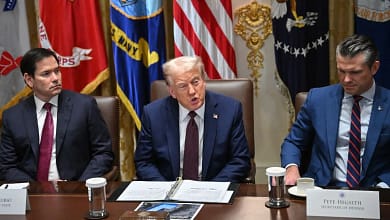
Pentagon officials confirmed up to 1,700 Guard personnel are on standby across 19 states to assist ICE with clerical and logistics roles. The White House is advancing plans for a similar deployment in Chicago after moves in Los Angeles and Washington, D.C.

Illinois Gov. JB Pritzker and Mayor Brandon Johnson say such federal forces would be illegal and unnecessary, noting that local crime trends have been falling. Reporters at the Oval Office quoted the president saying residents are “screaming” for help and suggesting New York might follow.

This dispute mixes questions of law, government power, and public safety, with real impacts on families and city services. It is unfolding now and raises big issues about federal-state relations and municipal autonomy.https://www.mindviewmagazine.com/

Key Takeaways

  • Jeffries says the president created an emergency to defend a major federal troop move.
  • Pentagon: up to 1,700 Guard members across 19 states are on standby for ICE support.
  • White House is moving forward with plans for deployment in Chicago after other cities.
  • Illinois leaders argue such federal action would be unlawful and unnecessary amid falling crime.
  • The conflict raises broader issues about federal power, state authority, and family safety.

White House advances plans to send National Guard to Chicago amid rising tensions

The White House has moved from discussion into action, outlining a deployment framework that would place national guard troops in Chicago next.

Pentagon officials say up to 1,700 National Guard members from 19 mostly Republican states are positioned to support ICE with clerical and logistical duties. That number points to a coordinated, multi-state deployment rather than a small, local operation.

Federal moves follow earlier actions in Los Angeles in June and recent activity in Washington, D.C., signaling an expanding footprint in major cities. Inside the administration, the shorthand “chicago next” has begun to appear as officials map sequencing.

“When ready, we will start in Chicago,” the president told reporters, adding that “we’ll help with New York” later.

The administration frames the effort as targeting crime, homelessness, and immigration enforcement while emphasizing that most Guard roles would be logistical support and clerical functions for ICE. Still, the federal government’s approach intersects with state authority and has sparked tensions with Democratic-led local officials who question necessity and legality.

Timing remains fluid, but public comments from the president and Pentagon positioning suggest the deployment could accelerate. Key variables include state cooperation, legal reviews, and local pushback.

  • Scope: Multi-state mobilization across 19 states.
  • Role: Logistics and clerical support tied to ICE.
  • Sequence: After Los Angeles and Washington, D.C.; Chicago next, then New York.

Trump ‘manufactured crisis’ to justify plan to send national guard to Chicago, l

Democrats say the administration is framing danger that local leaders reject. They argue the move is meant to manufacture crisis and create legal cover for federal action.

national guard chicago

Hakeem Jeffries accuses the president of playing games with public safety

Jeffries said the president is “playing games with the lives of Americans” and is using a manufactured crisis to rationalize federal intervention. He added there is “no basis, no authority” for dropping federal troops into a state that objects.

Gov. JB Pritzker calls it an abuse of power

The governor stressed Illinois was not asked for help and made no request for intervention. Pritzker called the threatened deployment an abuse of power and a trial run for a police state.

Chicago leaders warn against federal overreach

Brandon Johnson warned an unlawful guard chicago presence would inflame tensions and erode trust between residents and law enforcement. Rahm Emanuel urged the White House to partner on public safety issues like carjackings and gun violence, not treat the city as occupied.

  • City and state leaders say local crime trends undercut claims of an emergency.
  • Concerns go beyond policy to civil‑military norms and precedent for intervention.
  • Officials stress constitutional limits and the need for cooperative solutions.

What the law allows: Federal intervention, National Guard authority, and limits

Federal law draws clear lines around when troops can operate in U.S. cities. The National Guard normally stays under state control unless a formal federal step changes that chain of command.

law federal intervention

Posse Comitatus, Title 32, and when Guard troops can be federalized

The Posse Comitatus Act limits using the military for civilian enforcement. That law means active-duty forces generally cannot do police work.

Title 32 offers a narrower path. Under Title 32, Guard members can perform specific support roles while remaining under state control. The arrangement lets the Guard assist without full federalization.

Experts weigh in: Governor requests, emergencies, and the boundaries of presidential power

Legal scholar William C. Banks says governors hold primary authority to mobilize their Guard in crises. He notes the president can override a governor only in narrow, exceptional cases.

“Courts and precedent ultimately define enforceable limits.”

  • Guard usually answer to state leadership unless federalized.
  • Forced federal deployment over a governor’s objection is rare.
  • Even when deployed, troops are not permitted to make arrests.
Authority Who Commands Typical Roles Limits
State Active Duty Governor Disaster response, logistics, support No civilian arrests by military
Title 32 Governor (funded/authorized by federal government) Training, support, limited enforcement support Remains under state control; Posse limits apply
Federalized (Title 10) President National defense, federal missions Strict limits on domestic policing under Posse Comitatus

In Washington, D.C., different rules apply because of unique federal oversight. Recent decisions to arm Guard there and shift control highlight how legal paths can vary.

Ultimately, the balance between states and the federal government shapes what any deployment can actually do. Courts, statutes, and clear gubernatorial requests matter before troops move.

Claims of a crime emergency vs. current data in Chicago, D.C., and other cities

Public data suggest the narrative of a sweeping city emergency may be overstated. National FBI trends show violent crime moving toward historic lows, which invites a closer look at rhetoric versus numbers.

Chicago police reported year‑over‑year declines in murder, robbery, theft, and motor vehicle theft. Mayor Brandon Johnson said shootings fell about 40% year over year, a notable local improvement.

crime data

FBI trends and local reports

Across the country, violent crime rates have trended downward. That pattern complicates claims of a nationwide crisis and suggests policy should be data driven.

Mixed messages from Washington, D.C.

The president called D.C. a “hellhole” and later said “NO CRIME AND NO MURDER” after federal forces arrived. Local reports show continued, more modest declines, not a sudden reversal.

  • Los Angeles and New York face local challenges, but public data show improvements in several measures.
  • Law enforcement leaders urge trust‑building, data‑driven policing, and community programs rather than broad military‑style moves.
Area Recent Trend Notes
National Violent crime trending lower FBI data point to historic lows
Chicago Declines in major offenses Mayor cites ~40% drop in shootings
Washington, D.C. Modest declines Claims of extreme change conflict with local reports

Data can lag and be audited, but current indicators do not broadly support a declared emergency. Policy decisions should match local context and transparent reporting.

Scope of deployments: Where, how, and with what mandate

The response model now shows a repeatable footprint across cities with different legal and political contexts.

From Los Angeles through Washington, D.C., and likely Chicago next, the approach pairs visible presence with defined support roles. A court did not block the Los Angeles deployment, and nearly 2,000 troops remain in D.C. with authorization to carry arms while not making arrests.

deployment national guard

How missions are framed and organized

  • Mandate: The Pentagon describes mainly logistical support and clerical functions for immigration work, distinct from routine policing.
  • Scale: Up to 1,700 personnel across 19 states signals a major deployment lift and sustained planning.
  • Command: Whether units operate under Title 32 or federal status changes what tasks are allowed and who gives orders.

“When ready, officials say deployment will be phased by mission needs and legal clearances.”

City Posture Notes
Los Angeles Support Court challenge denied
Washington, D.C. Armed support ~2,000 troops; no arrest powers
Chicago (potential) Logistics & coordination Footprint may vary by sites and agency roles

Conclusion

As federal options are discussed, officials stress that process and consent matter more than headlines.

City and state leaders say there was no formal request for assistance and warn that any deployment must follow the law. Legal experts note governors normally control Guard activation and that guard troops rarely gain arrest powers.

Data complicate the rhetoric. National violent crime is near historic lows and Chicago reports declines in major offenses, which raises questions about the need for large troop movements.

Public safety remains the top priority, but outcomes depend on clear roles, honest timelines, and open communication between the federal government, the governor, and city leaders like Brandon Johnson.

Watch both the evolving plans and the data. Informed residents will help ensure any action balances safety, civil liberties, and local control.

FAQ

What happened in the recent dispute over sending guard troops to Chicago?

Leading Democrats accused the president of creating a public safety emergency to support a move that would deploy guard troops to Chicago. Illinois officials, including the governor and city leaders, pushed back, saying the action risks federal overreach and politicizes law enforcement. Chicago’s mayor and other local voices warned against a large-scale federal presence that could strain community trust.

What authority does the federal government have to deploy guard troops in a city?

Federal law includes tools like Title 32 and the Insurrection Act, which allow differing levels of federal involvement. Governors typically control state guard forces unless they are federalized. Posse Comitatus limits the use of regular military for domestic law enforcement, though exceptions exist. Legal experts say deployments normally follow a governor’s request or clear federal authorization tied to emergencies.

Did local crime data support an emergency deployment?

Nationally, FBI trends show many violent crime categories near historic lows, and several cities have reported declines in shootings and homicides over recent periods. Chicago’s latest reports indicated decreases in some major offenses, complicating claims that an immediate, drastic intervention was necessary. Analysts note data can vary by neighborhood and timeframe, so officials balance statistics with on-the-ground concerns.

How did Chicago’s leaders respond to talk of a guard deployment?

Mayor Brandon Johnson and other city officials opposed the move, arguing it would undermine local policing strategies and community relationships. Former Mayor Rahm Emanuel and state leaders similarly warned against federal overreach. Illinois Governor JB Pritzker described a potential deployment as an abuse of power and cautioned it could set a troubling precedent.

What do legal experts say about the limits of presidential power in this context?

Constitutional scholars stress that the president’s authority to intervene domestically is constrained. Courts and legal opinions emphasize the need for clear statutory backing or a governor’s consent for large-scale force. Experts also point to safeguards designed to prevent misuse of emergency powers for political ends.

Have other cities seen similar proposals or deployments?

Officials cited prior uses of guard support in places like Los Angeles and Washington, D.C., for specific missions such as crowd control, logistics, or infrastructure protection. Each deployment had unique legal and operational terms, and officials say comparisons should consider mandates, duration, and oversight mechanisms.

Could guard troops perform law enforcement duties if sent to Chicago?

The role of guard personnel varies by activation status. Under state control, they may assist with traffic, logistics, or support functions. If federalized, restrictions from Posse Comitatus can limit direct law enforcement actions by military personnel. Specific orders and legal authorities determine whether members can arrest, search, or carry out typical policing tasks.

What recourse do city and state officials have if they oppose a federal deployment?

Governors can refuse to federalize state forces, and city leaders can challenge actions through legal requests or court filings. Legislators and advocacy groups may also demand oversight, hearings, or legislation to clarify limits. Public pressure and media scrutiny often influence the outcome as well.

How should residents interpret conflicting statements about crime and safety?

Residents should look at local crime reports, independent analyses, and community policing updates to get a fuller picture. Crime trends can differ across neighborhoods, and official rhetoric may not match the data. Engaging with local leaders and community groups helps clarify priorities and proposed responses.https://topnewslive.online/trump-tariff-jitters-bitcoin-dips-below-rs-115200-crypto-market-cap-down-by-3-82/

Related Articles