Donald Trump Tariffs India Farmers Trade Talks: India Stands Firm on Agricultural Interests
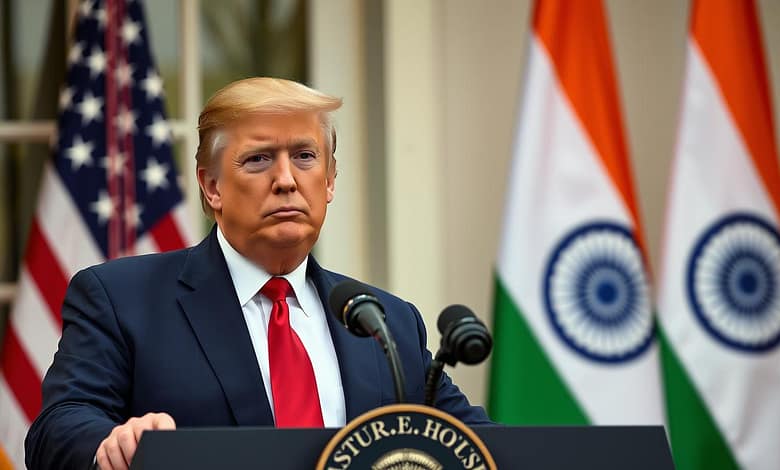
The ongoing Donald Trump tariffs India farmers trade talks have reached a critical juncture as India refuses to compromise on agricultural interests ahead of the next round of negotiations scheduled for August 25. The US decision to impose 25% tariffs will have minimal effect on India, according to sources, but agricultural, dairy, and genetically modified (GM) products remain contentious no-go areas for New Delhi in any potential trade agreement.
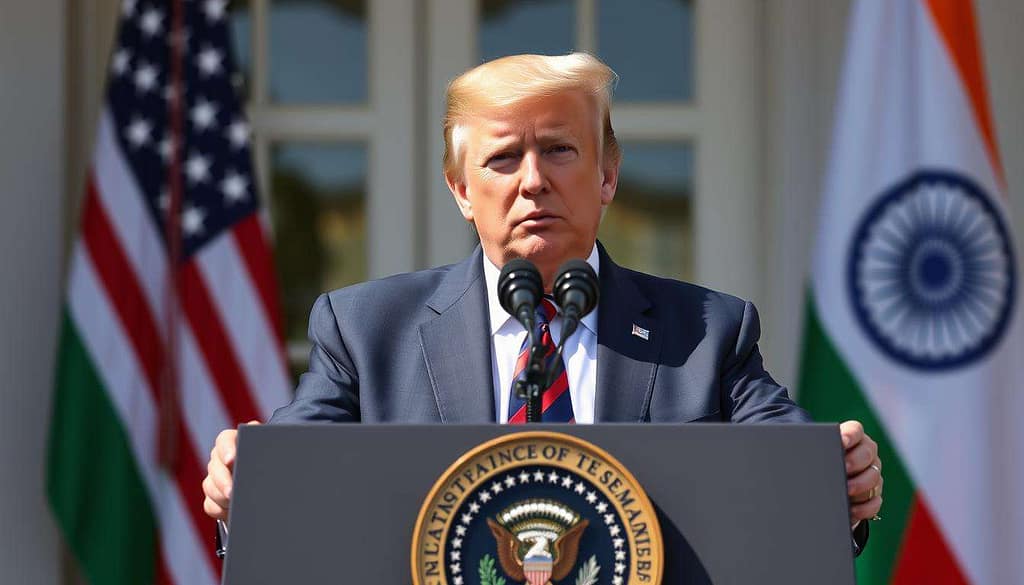
US-India Trade Relations Under Trump’s Tariff Policies
President Trump announced a 25% tariff on Indian goods, citing trade imbalances and ongoing disputes.
President Donald Trump’s administration has escalated trade tensions with India by announcing a 25% tariff on Indian exports, with additional penalties for India’s purchase of Russian oil and arms. This move comes amid bilateral trade negotiations that began in March, with five rounds of discussions already completed.
Trade between India and the US reached $131.8 billion in fiscal year 2024-25, including $86.5 billion in exports from India and $45.3 billion in imports. According to sources familiar with the negotiations, more than half of India’s exports to the US are expected to remain unaffected due to existing exemptions under Section 232 of US trade law.
Several sectors, however, would face the full impact of the 25% duty, including electrical and mechanical machinery ($9 billion), gems and jewelry ($12 billion), shrimp ($2.24 billion), textiles and clothing ($10.3 billion), leather and footwear ($1.18 billion), animal products ($2 billion), and chemicals ($2.34 billion).
Stay Updated on US-India Trade Developments
Subscribe to our newsletter for regular updates on the evolving trade negotiations and expert analysis on potential economic impacts.Subscribe to Trade Updates
India’s Firm Stance: Protecting Farmers and Agricultural Interests

Indian farmers have been vocal about protecting domestic agricultural interests in trade negotiations.
India has taken a clear position in the trade negotiations, emphasizing that duty exemptions for agricultural, dairy, and genetically modified products are non-negotiable. Commerce Minister Piyush Goyal told the Indian Parliament that “India will keep its national interest as a priority in any trade deal,” signaling the government’s unwillingness to compromise on these sensitive sectors.
Officials highlighted religious sentiments as a key factor in India’s stance on the dairy sector, noting concerns about the US dairy industry’s animal feed practices. “There are religious sentiments in the dairy sector. So, it is not acceptable. There will be no compromise on these segments in any of India’s trade pacts,” sources told PTI.
This position is consistent with India’s approach in all its trade agreements, where agricultural and dairy sectors have traditionally been protected to safeguard the livelihoods of millions of small and marginal farmers who form a significant voting bloc in the country.
Key Demands from India
- No duty concessions for agricultural products, including rice, wheat, and pulses
- Protection of the dairy sector due to religious sentiments and concerns about animal feed practices
- No market access for genetically modified (GM) food products
- Restoration of Generalized System of Preferences (GSP) benefits for Indian exporters
- Easing of visa restrictions for Indian professionals in the service sector
“We have risen from the 11th largest economy to one of the top 5 economies driven by our reforms, hard work of our farmers, MSMEs, and entrepreneurs. It is also widely expected that we will become the third largest economy in a few years.”
– Piyush Goyal, Commerce Minister of India
August 25 Talks: Expectations and Agenda

US and Indian trade representatives are set to meet for the sixth round of negotiations on August 25.
The sixth round of bilateral trade negotiations between India and the US is scheduled for August 25, with both sides facing increasing pressure to reach an agreement. The US delegation is expected to push for greater market access in agricultural and dairy sectors, while India will likely focus on securing exemptions from the newly imposed tariffs.
Key agenda items for the upcoming talks include:
US Priorities
- Market access for US agricultural and dairy products
- Reduction of India’s import duties on medical devices
- Addressing India’s price controls on medical equipment
- Concerns about India’s data localization requirements
- Reduction in India’s purchase of Russian oil
India’s Priorities
- Exemption from the 25% tariff for key export sectors
- Restoration of GSP benefits for Indian exporters
- Easing of US visa restrictions for Indian professionals
- Recognition of India’s certification standards
- Addressing high US tariffs on steel and aluminum
Potential sticking points in the negotiations include India’s stance on agricultural and dairy products, data localization policies, and its continued purchase of Russian oil, which Trump has specifically criticized. The US administration officials have described India’s oil purchases from Russia as a “point of irritation” in bilateral relations.
Experts widely view Trump’s tariff move as a pressure tactic to get India to agree to US terms before the August 25 negotiations.
Impact Analysis: Economic and Political Implications

US-India bilateral trade reached $131.8 billion in 2024-25, with agricultural products forming a significant portion of trade discussions.
Economic Impact on Indian Exports
The 25% tariff is expected to have a differentiated impact across various sectors of the Indian economy. According to trade analysts, approximately $40-48 billion worth of Indian exports would be affected by the new tariffs, while the remaining exports would continue to enjoy exemptions under Section 232 of US trade law.
| Sector | Export Value ($ billion) | Expected Impact |
| Gems and Jewelry | 12.0 | High |
| Textiles/Clothing | 10.3 | High |
| Electrical/Mechanical Machinery | 9.0 | Medium |
| Chemicals | 2.34 | Medium |
| Shrimp | 2.24 | High |
| Animal Products | 2.0 | Medium |
| Leather and Footwear | 1.18 | High |
Political Implications
Domestically, the Indian government faces pressure from farmer organizations and agricultural lobbies to maintain protections for the agricultural sector. With several state elections on the horizon, the government is unlikely to make concessions that could alienate the farming community, which constitutes a significant voting bloc.
In the US, Trump’s aggressive stance on trade is seen as part of his broader economic nationalism agenda, appealing to his base ahead of the upcoming elections. The administration’s frustration with India’s purchase of Russian oil adds a geopolitical dimension to what was primarily a trade dispute.
Understand the Full Impact
Download our comprehensive report on how Trump’s tariffs will affect specific industries and what businesses can do to prepare.Download Impact Analysis Report
Stakeholder Reactions: Voices from Both Sides

Representatives from Indian farmers’ unions have expressed strong opposition to any concessions in agricultural trade.
Indian Farmers’ Unions
“We will not accept any trade deal that compromises our food security or the livelihoods of millions of small farmers. The government must stand firm against pressure from the US to open our agricultural markets.”
– Rakesh Tikait, Bharatiya Kisan Union
Indian Government Officials
“India is the world’s fastest growing major economy, seen as a bright spot by economists and institutions. We negotiate from a position of strength, not weakness.”
– Piyush Goyal, Commerce Minister
US Trade Representatives
“India’s extensive purchase of crude oil from Russia is a point of irritation. We expect our trading partners to align with our strategic interests if they want preferential access to our markets.”
– US Administration Official (unnamed)
Industry Associations
“The 25% tariff will significantly impact our competitiveness in the US market. We urge both governments to find a middle ground that protects jobs and businesses on both sides.”
– Ajay Sahai, Federation of Indian Export Organizations

US industry groups have expressed mixed reactions, with some supporting tariffs and others concerned about supply chain disruptions.
Historical Parallels: Previous US-India Trade Disputes

US-India trade relations have experienced several periods of tension over the past five years.
The current trade dispute bears striking similarities to the 2019 tariff conflict when the Trump administration removed India from the Generalized System of Preferences (GSP) program, which had allowed duty-free entry for up to $5.6 billion worth of Indian exports to the US.
2019 GSP Removal and Its Aftermath
In June 2019, the US terminated India’s designation as a beneficiary developing country under the GSP program, citing India’s failure to provide “equitable and reasonable access to its markets.” India responded by imposing retaliatory tariffs on 28 US products, including almonds, apples, and walnuts.
The 2019 dispute similarly centered around agricultural market access, data localization policies, and price controls on medical devices. Negotiations stalled as both sides maintained firm positions on their key demands.
Key Differences in the Current Dispute
Unlike the 2019 conflict, the current dispute occurs in a changed geopolitical context, with India’s Russian oil purchases adding complexity to the negotiations. Additionally, India’s economic position has strengthened, with its GDP now ranking among the top five globally, giving it more leverage in trade talks.
Another significant difference is the broader scope of the current tariffs, which affect a wider range of Indian exports compared to the more targeted approach in 2019.
How did the 2019 trade dispute affect US-India trade volumes?
Despite the GSP removal and retaliatory tariffs, bilateral trade between the US and India grew from $142 billion in 2018 to $146 billion in 2019. However, growth slowed significantly compared to previous years, and certain sectors like agricultural products saw notable declines.
Were agricultural issues resolved in previous negotiations?
No, agricultural market access has remained a persistent sticking point in US-India trade relations. Despite multiple rounds of negotiations since 2019, India has maintained its protective stance on agricultural imports, citing food security concerns and the need to protect small farmers.
Expert Predictions: Potential Outcomes and Long-term Implications

Trade experts have offered varied predictions about the outcome of the August 25 negotiations.
Likely Scenarios
Partial Agreement
Most experts predict a limited deal addressing non-controversial issues while deferring decisions on agricultural access and dairy products. This would allow both sides to claim progress while avoiding politically sensitive concessions.
Most Likely
Extended Negotiations
Some analysts anticipate that talks will be extended beyond August, with the US potentially offering temporary tariff relief in exchange for commitments to continue negotiations on more difficult issues.
Possible
Escalation
A minority view suggests that negotiations could break down, leading to additional tariffs and retaliatory measures from India, particularly if the US maintains its stance on agricultural market access.
Less Likely
Long-term Implications
Dr. Amitendu Palit, Senior Research Fellow at the National University of Singapore, suggests that “regardless of the immediate outcome, US-India trade relations are entering a new phase characterized by greater strategic considerations beyond purely economic factors.”
According to Richard Rossow, Senior Adviser at the Center for Strategic and International Studies, “The agricultural impasse reflects deeper structural differences in how both countries approach trade policy. India’s development model prioritizes self-sufficiency in food production, while the US seeks market access for its highly competitive agricultural sector.”
Most experts agree that while short-term tensions may persist, the long-term trajectory of US-India economic relations remains positive, driven by strategic convergence in other areas such as defense cooperation and technology partnerships.
Join Our Expert Webinar
Register for our upcoming webinar featuring leading trade experts discussing the implications of the US-India trade negotiations.Register for Webinar
Timeline: Road to August 25 Negotiations

Key events in the US-India trade negotiations leading up to the August 25 talks.
- March 2025: First round of bilateral trade negotiations begins between US and India.
- April-June 2025: Second, third, and fourth rounds of negotiations held with limited progress on key issues.
- July 10, 2025: Fifth round of negotiations concludes without breakthrough on agricultural market access.
- July 31, 2025: President Trump announces 25% tariff on Indian goods, citing trade imbalances and India’s purchase of Russian oil.
- August 1, 2025: Commerce Minister Piyush Goyal addresses Indian Parliament, emphasizing that India will prioritize national interest in trade talks.
- August 5, 2025: Indian government issues formal statement indicating that agricultural, dairy, and GM products remain no-go areas in trade negotiations.
- August 25, 2025: Sixth round of trade negotiations scheduled between US and Indian delegations.
The outcome of the August 25 negotiations will be crucial in determining the future trajectory of US-India trade relations and could have significant implications for global trade patterns.
Stay Informed
Bookmark this page for updates as the August 25 negotiations approach. We’ll provide real-time coverage and expert analysis of the talks.Set News Alert
Conclusion: Navigating Complex Trade Dynamics

The outcome of US-India trade negotiations will have far-reaching implications for bilateral relations and global trade patterns.
As the August 25 negotiations approach, both the US and India face the challenge of balancing economic interests with domestic political considerations. India’s firm stance on protecting its agricultural sector reflects both economic necessity and political reality, while the US push for market access aligns with its broader trade agenda.
The imposition of 25% tariffs by the Trump administration has added urgency to the negotiations, but it remains to be seen whether this pressure tactic will yield the desired concessions from India, particularly in sensitive areas like agriculture and dairy.
What is clear is that the outcome of these negotiations will have significant implications not just for bilateral trade but also for the broader strategic partnership between the world’s oldest and largest democracies.
Comprehensive Trade Analysis
For a deeper understanding of the US-India trade dynamics and potential outcomes of the negotiations, download our comprehensive analysis report.Download Full Report