U.S. Independence Day Protests & Unrest: What You Need to Know
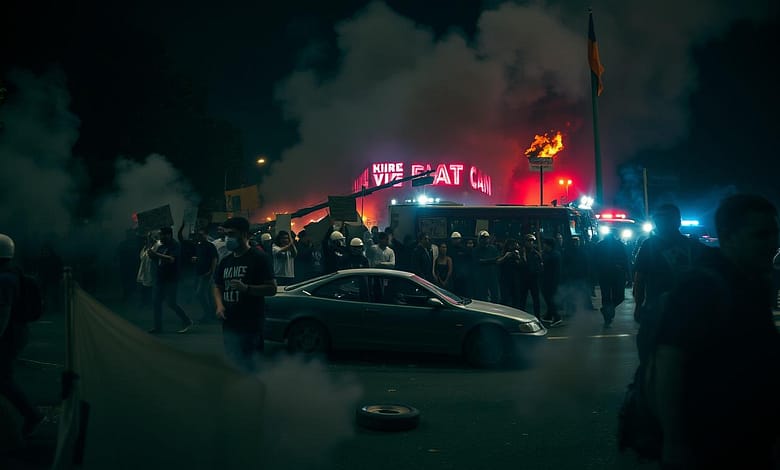
As the nation celebrates its birthday, a different story unfolds on the streets. Protests and demonstrations have become an integral part of July 4th celebrations, sparking concerns about civil unrest across America.
This phenomenon is not new, but its impact is felt nationwide. From coast to coast, citizens are exercising their right to free speech, often turning festive events into heated gatherings.
Understanding the underlying causes and implications of these events is crucial for a nuanced perspective on the state of the nation.
Key Takeaways
- The significance of protests on July 4th
- Causes of civil unrest in America
- The impact of protests on national celebrations
- Regional variations in protest intensity
- The role of social media in mobilizing protests
The Current Landscape of U.S. Independence Day Protests & Unrest
Protests and demonstrations are erupting in major U.S. cities on Independence Day, highlighting deep-seated grievances against the government and societal issues. These events are not isolated but part of a broader landscape of civil action across the nation.
Major Cities Experiencing Demonstrations
Several major cities are at the forefront of these protests, including New York City, Los Angeles, and Chicago. These cities are seeing large gatherings, with protesters voicing concerns over various issues ranging from social justice to economic policies.
Scale and Scope of Current Protests
The scale of these protests is significant, with thousands participating across the country. The protests are not limited to urban centers; suburban areas are also experiencing demonstrations, indicating a widespread discontent.
| City | Estimated Attendance | Primary Issues |
|---|---|---|
| New York City | 5,000+ | Social Justice, Economic Inequality |
| Los Angeles | 3,000+ | Environmental Concerns, Government Policies |
| Chicago | 2,000+ | Racial Equality, Police Reform |
Emerging Patterns of Civil Action
An emerging pattern is the coalition building among different protest groups, uniting various causes under a broader banner of dissent. This unity is likely to shape the future of civil action in the U.S., potentially leading to more sustained and widespread movements.
As the nation observes Independence Day amidst these protests, it’s clear that the spirit of dissent is a significant component of American patriotism, reflecting a complex and dynamic socio-political landscape.
Historical Context: Protests on Independence Day
The history of protests on the Fourth of July is as old as the nation itself, reflecting ongoing struggles for justice and equality. While the day commemorates American independence, it has also served as a platform for various groups to voice their dissent and demands for change.
Previous Notable Fourth of July Demonstrations
Throughout history, the Fourth of July has witnessed significant protests. For instance, in the 19th century, abolitionists used the day to highlight the contradiction between celebrating freedom while slavery still existed. Notable figures like Frederick Douglass delivered powerful speeches denouncing the injustices of slavery.

Evolution of Patriotic Dissent in America
Over time, the nature of protests on Independence Day has evolved. From early abolitionist movements to modern-day civil rights and anti-war protests, the day has been used to draw attention to various causes. This patriotic dissent reflects a deep-seated desire to make America live up to its ideals.
The Symbolism of Protesting on July 4th
Protesting on July 4th symbolizes a powerful form of civil disobedience on independence day, challenging the status quo and pushing for reforms. It juxtaposes the celebration of freedom with the ongoing struggle for true equality and justice, highlighting the unfinished work of American democracy.
Key Issues Driving Current Protests
The current wave of protests on U.S. Independence Day is driven by a complex interplay of social, political, and economic factors. As citizens gather to celebrate the nation’s birthday, various groups are using the occasion to draw attention to their causes.
Social Justice Concerns
Social justice remains a pivotal issue, with many protesters focusing on racial equality and police reform. The Black Lives Matter movement continues to be at the forefront, advocating for an end to systemic racism and police brutality. These concerns are not new but have gained renewed momentum in recent years.
Political Grievances
Political grievances are another significant driver of the current protests. Many Americans feel disenfranchised and are protesting against government policies they perceive as unjust or harmful. Issues such as immigration reform and government accountability are prominent among the protesters’ demands.
Economic Factors
Economic factors play a crucial role in the protests, with issues like wealth inequality and the housing crisis being major concerns.
Wealth Inequality
The widening gap between the rich and the poor is a significant issue. Protesters argue that the current economic system favors the wealthy, leaving many Americans struggling to make ends meet. The table below illustrates the growing wealth disparity in the U.S.:
| Year | Wealth Held by Top 1% | Wealth Held by Bottom 50% |
|---|---|---|
| 2010 | 35% | 1% |
| 2020 | 40% | 0.5% |
Housing Crisis Impact
The housing crisis is another economic factor driving the protests. Many Americans are facing rising housing costs, eviction, and homelessness. Protesters are demanding action from policymakers to address these issues and provide affordable housing options.
In conclusion, the protests on U.S. Independence Day are driven by a multifaceted set of issues, including social justice concerns, political grievances, and economic factors. Understanding these drivers is crucial to grasping the full picture of activism in America today.
Geographic Distribution of Unrest
The geographic distribution of unrest on U.S. Independence Day reveals a complex landscape of protests across different regions. While some areas experience intense demonstrations, others remain relatively calm.
Urban Centers vs. Suburban Demonstrations
Urban areas tend to have more organized and larger protests, often centered around city halls or significant landmarks. In contrast, suburban demonstrations are generally smaller but still reflect the broader grievances.
Regional Differences in Protest Activity
Regional differences significantly influence the nature of protests. For instance, coastal regions may focus on environmental issues, while the Midwest might emphasize agricultural concerns.
Hotspots of Concentrated Action
Some cities have emerged as hotspots due to historical or current events. A comparative analysis of these hotspots is provided in the table below.
| City | Protest Size | Main Issues |
|---|---|---|
| New York | Large | Social Justice, Economic Inequality |
| Los Angeles | Medium | Environmental Concerns, Political Grievances |
| Chicago | Large | Social Justice, Gun Control |
Major Protest Groups and Their Demands
The landscape of Independence Day protests is diverse, with numerous groups voicing their concerns. These protests are not spontaneous but are often organized by well-structured movements.
Organized Movements Participating
Several major protest groups are involved in the Independence Day protests. These include civil rights organizations, environmental activists, and labor unions. Each of these groups brings their unique concerns to the forefront.
Stated Goals and Objectives
The stated goals of these protest groups vary widely. Civil rights organizations are pushing for police reform and racial equality, while environmental activists are demanding stronger climate action. Labor unions, on the other hand, are fighting for better working conditions and fair wages.
Coalition Building Among Different Causes
One of the significant aspects of the current protests is the coalition building among different causes. For instance, environmental groups are often seen protesting alongside labor unions, highlighting the intersectionality of their causes.

| Protest Group | Primary Demands |
|---|---|
| Civil Rights Organizations | Police reform, racial equality |
| Environmental Activists | Stronger climate action, reduction in carbon emissions |
| Labor Unions | Better working conditions, fair wages |
Government Response to Independence Day Unrest
The U.S. government’s response to the Independence Day unrest has been multifaceted, involving various federal and local agencies. As protests unfolded across the nation, officials at all levels were tasked with maintaining order while respecting the right to peaceful assembly.
Federal Statements and Actions
At the federal level, government officials issued statements emphasizing the importance of national unity and calm. The White House released a statement calling for peaceful protest and urging Americans to respect the democratic process. Federal agencies, including the Department of Homeland Security, were placed on high alert to assist local authorities as needed.
Local Government Approaches
Local governments adopted varying strategies to manage the protests. Some cities opted for a more conciliatory approach, with mayors and city officials engaging directly with protest organizers. In other areas, local law enforcement was more visible, with riot police deployed to maintain order.
Law Enforcement Strategies
Law enforcement agencies employed a range of tactics to manage the protests. Crowd control measures included the use of barriers and, in some cases, pepper spray or tear gas to disperse unruly crowds.
Crowd Control Tactics
Police departments utilized various crowd control tactics, including the formation of human chains and the deployment of mounted units.

De-escalation Efforts
In addition to crowd control, many law enforcement agencies prioritized de-escalation techniques. Officers were trained to engage with protesters calmly and to avoid confrontations whenever possible. As one law enforcement official noted,
“Our goal is to protect the right to protest while maintaining public safety.”
The government’s response to the Independence Day unrest highlighted the complex balance between maintaining order and protecting civil liberties. As the nation continues to navigate these challenges, the strategies employed during this period will likely inform future responses to similar events.
Impact on Traditional July4th Celebrations
As protests continue, the usual fanfare of July 4th celebrations is being reshaped. The widespread demonstrations are affecting how communities observe Independence Day, leading to changes in public events, varied community reactions, and the emergence of alternative celebrations.
Changes to Public Events
Many traditional July 4th events, such as parades and fireworks displays, have been canceled or modified due to the ongoing protests. For instance, some cities have replaced large gatherings with smaller, more subdued events, while others have canceled public events altogether to avoid potential clashes.
Community Reactions
Community reactions to these changes have been mixed. Some residents support the shift, viewing it as a necessary response to current social issues, while others feel that it diminishes the spirit of Independence Day. Public sentiment is divided, reflecting broader societal debates.
Alternative Celebrations Emerging
In place of traditional events, alternative celebrations are emerging. These include community-organized rallies that combine patriotic themes with protest messages, as well as virtual events that allow wider participation.

Such alternatives are redefining how Americans celebrate Independence Day.
Safety Considerations for the Public
The convergence of protests and celebrations on July 4th necessitates a closer look at public safety measures. As demonstrations unfold across the U.S., being aware of one’s surroundings and taking necessary precautions can significantly mitigate risks.
Areas to Avoid
During large-scale protests, certain areas may become hotspots of activity. It’s advisable to steer clear of major intersections, government buildings, and areas with ongoing demonstrations unless you’re participating.
Emergency Preparedness Tips
Being prepared is key to staying safe. Here are some tips:
- Stay informed about the locations and times of planned protests.
- Have a pre-planned emergency contact and meeting point.
- Keep essential supplies like water, non-perishable snacks, and a first-aid kit handy.
Resources for Assistance
In case of emergencies, knowing where to seek help is crucial.
Emergency Contact Information
Always keep important phone numbers handy, such as local emergency services and the contact information for your nearest hospital.
Community Support Networks
Many communities have support networks in place for emergencies. Familiarize yourself with local resources, such as community centers or neighborhood watch programs.
| Resource | Contact Information |
|---|---|
| Local Emergency Services | 911 |
| Nearest Hospital | (123) 456-7890 |
| Community Support Hotline | (987) 654-3210 |
Media Coverage and Public Perception
Media coverage of U.S. Independence Day protests is a critical factor in shaping the narrative around these demonstrations. The way information is presented to the public can significantly influence perceptions and reactions to the protests.
Mainstream Media Reporting
Mainstream media outlets play a significant role in covering Independence Day protests. Their reporting can vary from objective coverage to more sensationalized accounts, impacting public opinion. For instance, some outlets may focus on the disruptions caused by protests, while others highlight the underlying issues driving the demonstrations.
Social Media Narratives
Social media platforms have become crucial in shaping the narrative around Independence Day protests. They provide a space for real-time updates, firsthand accounts, and diverse perspectives. However, they also pose challenges due to the spread of misinformation and the creation of echo chambers.
International Reactions
The international community closely watches major protests in the United States. Foreign media coverage can influence global perceptions of the U.S. and its domestic issues. This international lens can also impact diplomatic relations and how other countries view U.S. domestic policies.
Misinformation Concerns
A significant concern with both mainstream and social media coverage is the spread of misinformation. False or misleading information can escalate tensions, mislead the public, and complicate the understanding of protest issues. Efforts to verify information are crucial in mitigating these risks.
| Media Type | Role in Shaping Public Perception | Challenges |
|---|---|---|
| Mainstream Media | Objective and sensationalized reporting | Bias in reporting, focus on disruptions |
| Social Media | Real-time updates and diverse perspectives | Misinformation, echo chambers |
| International Media | Influences global perceptions of the U.S. | Diplomatic implications, biased reporting |
Legal Rights of Protesters and Citizens
The right to protest is a fundamental aspect of American democracy, protected by the First Amendment. As citizens exercise this right on Independence Day, understanding the legal framework that governs protests is essential.
First Amendment Protections
The First Amendment guarantees the right to free speech, assembly, and petition. This means that individuals have the right to protest, demonstrate, and express their views without fear of government retaliation, as long as they are doing so peacefully.
Limitations on Protests
While the First Amendment provides broad protections, there are limitations. Protests cannot incite violence, obstruct traffic, or violate other laws. Understanding these boundaries is crucial for both protesters and law enforcement.
What to Do If Detained
If you are detained during a protest, remain calm and assert your rights. You have the right to remain silent and to request an attorney. Knowing what to do in such situations can help protect your rights.
Resources for Legal Assistance
For those who need legal help during or after protests, several organizations offer assistance. These include the American Civil Liberties Union (ACLU) and other local legal aid groups. Knowing where to turn for help can be invaluable.
Voices from the Ground: Firsthand Accounts
Firsthand accounts from the Independence Day protests reveal a complex tapestry of emotions, motivations, and consequences. These personal stories provide a nuanced understanding of the events that transpired on July 4th.
Protester Perspectives
Protesters shared their reasons for participating in the demonstrations, citing issues such as social justice, political grievances, and economic concerns. One protester noted,
“I marched to bring attention to the systemic inequalities that persist in our society.”
Local Resident Experiences
Local residents described the impact of the protests on their daily lives, with some expressing support for the demonstrations and others voicing concerns about safety and disruption. A resident remarked, “While I understand the right to protest, the blockades caused significant inconvenience.”
Business Owner Impacts
Business owners reported mixed effects on their operations, with some experiencing a decline in customers due to the protests, while others saw an increase in support from the community. A business owner stated,
“The protests brought attention to our cause, and we received more customers who sympathized with our message.”
First Responder Testimonials
First responders shared their experiences of managing the protests, highlighting the challenges of maintaining order while respecting the right to demonstrate. A first responder noted, “Our role is to ensure public safety while facilitating the right to protest.”
| Perspective | Key Concerns | Experiences |
|---|---|---|
| Protesters | Social justice, political grievances | Participated in demonstrations |
| Local Residents | Safety, disruption | Expressed support or concerns |
| Business Owners | Impact on operations | Reported mixed effects |
| First Responders | Maintaining order, public safety | Managed protests, ensured safety |
Conclusion: Navigating Independence Day During Civil Unrest
Navigating Independence Day during times of civil unrest requires a nuanced understanding of the complex issues at play. As protests and demonstrations unfold across the United States, it’s essential to stay informed about the key drivers of civil unrest and the various groups involved.
By understanding the historical context of protests on Independence Day and the current landscape of demonstrations, citizens can better navigate the complexities of this situation. Staying aware of the geographic distribution of unrest and the government’s response can also help individuals plan their activities and ensure their safety.
Ultimately, navigating independence day during civil unrest involves balancing the right to protest with the need for public safety. By staying informed and being mindful of the issues at stake, Americans can work towards a more equitable and just society.
FAQ
What are the main reasons behind the U.S. Independence Day protests and unrest?
The main reasons include social justice concerns, political grievances, and economic factors such as wealth inequality and the housing crisis.
Which cities are experiencing the most significant demonstrations on Independence Day?
Major cities experiencing demonstrations include urban centers and some suburban areas, with regional differences in protest activity.
How is the government responding to the Independence Day unrest?
The government is responding through federal statements and actions, local government approaches, and law enforcement strategies, including crowd control and de-escalation efforts.
What are the safety considerations for the public during the protests?
The public should be aware of areas to avoid, have emergency preparedness tips, and know resources for assistance, including emergency contact information and community support networks.
What are the legal rights of protesters and citizens during the demonstrations?
Protesters and citizens have First Amendment protections, but there are also limitations on protests; it’s essential to know what to do if detained and have resources for legal assistance.
How are traditional July4th celebrations being impacted by the protests?
Traditional celebrations are being affected, with changes to public events, community reactions, and alternative celebrations emerging.
What role is social media playing in the protests and unrest?
Social media is influencing the protests through narratives and information dissemination, but there are also concerns about misinformation.
Are there any notable historical precedents for protests on Independence Day?
Yes, there have been previous notable Fourth of July demonstrations, and patriotic dissent has evolved over time, with the symbolism of protesting on July4th being significant.