Personal Loans: Your Complete Guide to Borrowing Wisely

Looking for financial flexibility? Personal loans offer a versatile solution for consolidating debt, covering unexpected expenses, or funding important life events. This comprehensive guide will walk you through everything you need to know about personal loans—from types and application processes to finding the best rates for your unique situation.
What Are Personal Loans?
A personal loan is a fixed-amount loan that provides a lump sum of money you repay over a set period with fixed monthly payments. Unlike credit cards with variable rates, personal loans typically offer fixed interest rates, making budgeting more predictable.
Common Uses for Personal Loans
- Debt consolidation to combine multiple high-interest debts
- Home improvements and renovations
- Medical expenses not covered by insurance
- Major life events like weddings or relocations
- Unexpected emergency expenses
- Education costs or professional development

Ready to explore your personal loan options?
Check your rate without affecting your credit score and see what terms you qualify for.
Checking rates won’t impact your credit score
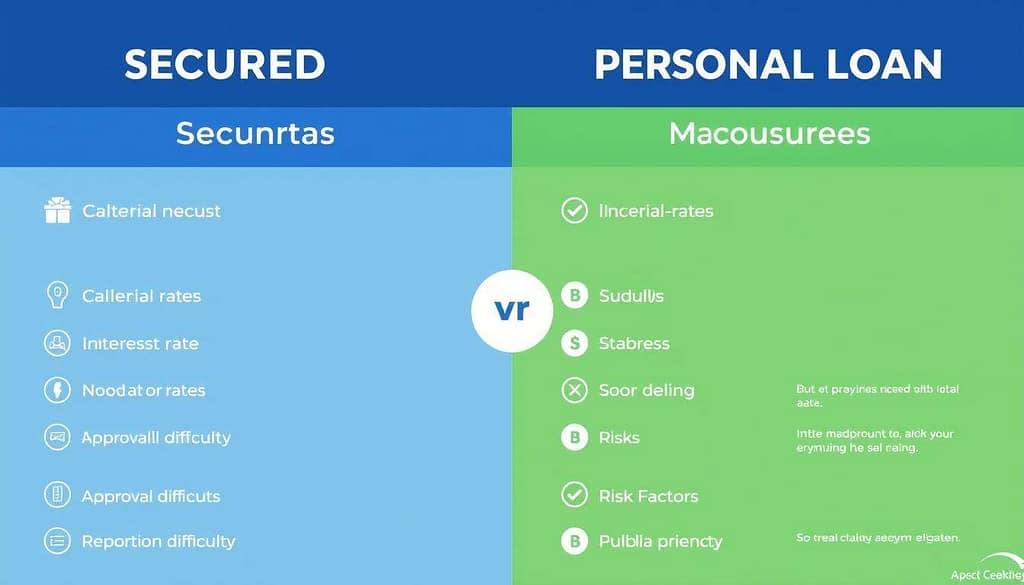
Secured vs. Unsecured Personal Loans
When exploring personal loans, you’ll encounter two main types: secured and unsecured. Understanding the differences is crucial for choosing the right option for your financial situation.
Secured Personal Loans
- Requires collateral (vehicle, savings account, etc.)
- Lower interest rates due to reduced lender risk
- Higher borrowing limits often available
- Easier approval for those with limited credit history
- Longer repayment terms may be offered
Best for: Borrowers with valuable assets who want lower rates or have credit challenges
Unsecured Personal Loans
- No collateral required to secure the loan
- Faster approval process in many cases
- No risk of asset loss if you default
- More flexible use of funds typically allowed
- Widely available from most lenders
Best for: Borrowers with good credit who prefer not to risk assets
How to Apply for a Personal Loan
The personal loan application process is straightforward, but knowing what to expect can help you prepare properly and increase your chances of approval.
1. Check Your Credit
Review your credit report and score before applying. This helps you understand what loans you might qualify for and identify any errors that need correction.

2. Research Lenders
Compare rates, terms, and fees from multiple lenders including banks, credit unions, and online lenders to find the best offer for your situation.
3. Gather Documentation
Prepare necessary documents including identification, proof of income, employment verification, and details about existing debts.

Required Documentation
- Identification: Government-issued ID, Social Security number
- Income verification: Pay stubs, tax returns, W-2 forms
- Employment information: Employer name, contact details, length of employment
- Residence information: Current address and housing payment details
- Bank statements: Recent statements from checking/savings accounts
- Debt information: Details about existing loans and credit card balances
- Loan purpose: Explanation of how you plan to use the funds
- Collateral details: Information about assets (for secured loans)
Typical Approval Timeline
The approval process varies by lender, but here’s what you can generally expect:
- Online application: 10-15 minutes to complete
- Initial decision: Same day to 3 business days
- Verification process: 1-7 business days
- Final approval: 1-7 business days after verification
- Funding: 1-5 business days after approval
Ready to start your application?
Compare personal loan offers from multiple lenders to find your best rate.
Key Factors to Consider When Choosing a Personal Loan
Finding the right personal loan involves more than just looking at the advertised rate. Consider these critical factors to ensure you’re getting the best deal for your situation.
Interest Rates and APR
The Annual Percentage Rate (APR) represents the true cost of borrowing, including both the interest rate and fees. Even a small difference in APR can significantly impact your total repayment amount.
Example: On a $10,000 loan with a 5-year term, the difference between 10% and 12% APR is approximately $600 in total interest paid.
Rates typically range from 6% to 36% based on:
- Your credit score and history
- Income and debt-to-income ratio
- Loan amount and term length
- Whether the loan is secured or unsecured

Repayment Terms
Loan terms typically range from 12 to 84 months. Consider:
- Shorter terms: Higher monthly payments but less total interest
- Longer terms: Lower monthly payments but more total interest
- Prepayment penalties: Some lenders charge fees for paying off loans early
Fees to Watch For
| Fee Type | Typical Range | What to Know |
| Origination Fee | 0-8% of loan amount | Often deducted from loan proceeds; increases effective APR |
| Late Payment Fee | $15-40 or 5% of payment | Charged when payments are missed or late |
| Prepayment Penalty | 0-5% of remaining balance | Charged for paying off loan early; many lenders don’t charge this |
| Application Fee | $0-100 | One-time fee for processing application; many lenders waive this |
| Returned Payment Fee | $15-40 | Charged when a payment is rejected due to insufficient funds |
Lender Reputation and Customer Service
Research potential lenders thoroughly by:
- Reading customer reviews and testimonials
- Checking Better Business Bureau ratings
- Reviewing complaint databases like the Consumer Financial Protection Bureau
- Testing customer service responsiveness before committing
How to Choose the Best Personal Loan for Your Needs
Finding the ideal personal loan requires careful consideration of your financial situation and goals. Follow these steps to make an informed decision.
Assess Your Financial Health
- Calculate your debt-to-income ratio (DTI)
- Review your budget for loan payment capacity
- Check your credit score and report
- Determine exactly how much you need to borrow
Compare Multiple Offers
- Get prequalified with several lenders
- Compare APRs, not just interest rates
- Review all fees and charges
- Consider both monthly payment and total cost
Look Beyond the Rate
- Evaluate customer service quality
- Check for flexible payment options
- Look for hardship programs
- Consider funding speed if time-sensitive
Pro Tip: Prequalification vs. Application
Many lenders offer prequalification that uses a soft credit check, which won’t impact your credit score. This allows you to compare potential rates before submitting a full application that triggers a hard credit inquiry.
Find your perfect personal loan match
Compare personalized offers from top lenders based on your credit profile.
Free comparison with no impact to your credit score
Frequently Asked Questions About Personal Loans
What credit score is needed for a personal loan?
Most lenders prefer a credit score of 670 or higher for the best rates, but loans are available for various credit profiles:
- Excellent (720+): Qualify for the lowest rates and highest loan amounts
- Good (690-719): Access competitive rates with multiple options
- Fair (630-689): May qualify with higher rates
- Poor (below 630): Limited options with higher rates or may require a co-signer
Can I get a personal loan with bad credit?
Yes, personal loans are available for borrowers with bad credit, though they typically come with higher interest rates. Consider these options:
- Secured personal loans that use collateral
- Adding a co-signer with better credit
- Credit union loans (often more flexible with credit requirements)
- Online lenders specializing in bad credit loans
Before accepting a high-interest loan, explore alternatives like credit builder loans or working to improve your credit first.
How do personal loans affect credit scores?
Personal loans can impact your credit score in several ways:
- Application: A hard inquiry may temporarily lower your score by 5-10 points
- New account: Initially may lower your average account age
- Credit mix: Adding an installment loan to your credit mix can positively impact your score
- Payment history: On-time payments build positive history (35% of your FICO score)
- Debt consolidation: Paying off revolving debt can improve utilization ratio
The most significant long-term impact comes from making consistent, on-time payments throughout the loan term.
What’s the difference between a personal loan and a credit card?
While both provide access to funds, they differ in several key ways:
- Structure: Personal loans provide a lump sum with fixed payments; credit cards offer revolving credit
- Interest rates: Personal loans typically have lower rates than credit cards
- Repayment: Loans have fixed terms; credit cards have minimum payments with no set end date
- Fees: Loans may have origination fees; cards often have annual fees
- Best uses: Loans work better for large, one-time expenses; cards are better for ongoing purchases
How quickly can I get funds from a personal loan?
Funding times vary by lender:
- Online lenders: Some offer same-day or next-day funding after approval
- Banks: Typically 1-7 business days after approval
- Credit unions: Usually 1-5 business days after approval
To speed up the process, have all documentation ready, respond quickly to lender requests, and consider lenders advertising fast funding times if you need money quickly.
Making the Right Personal Loan Decision
Personal loans can be powerful financial tools when used wisely. By understanding the different types available, carefully considering key factors like rates and terms, and comparing multiple offers, you can find a loan that meets your needs without creating unnecessary financial strain.
Remember that the best personal loan is one that fits your specific financial situation and goals. Take time to assess your needs, research your options thoroughly, and read the fine print before signing any loan agreement.
Ready to take the next step?
Compare personalized loan offers from multiple lenders to find your best rate.
Free, secure comparison with no impact to your credit score