About the Deadly Vijay Karur Full Tragedy Repor
By [mindviewmagazine]
Date: 27 September 2025
Lead (TL;DR)
A tragic crowd crush (stampede) during a political rally led by actor-turned-politician Vijay in Karur, Tamil Nadu, on Saturday night left dozens dead and many more injured. Local hospitals and emergency services were overwhelmed; state leaders have pledged investigations and ex-gratia payments, while the incident has reignited debate about crowd control and political-event safety in India.https://www.mindviewmagazine.com/
Introduction — what happened
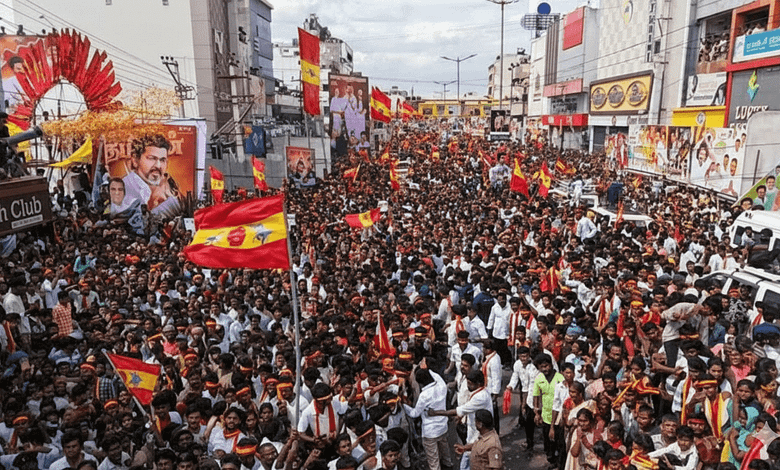
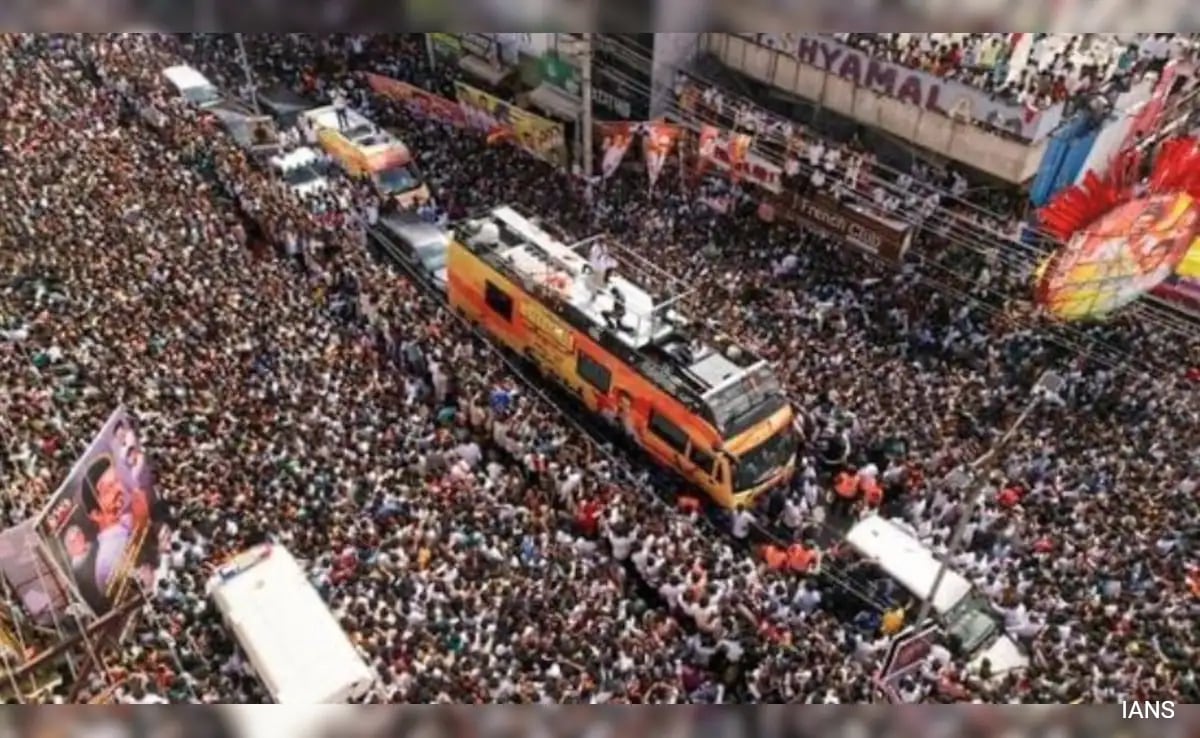
On the evening of Saturday, 27 September 2025, a political rally in Karur hosted by actor and TVK party chief Vijay drew an enormous crowd — by officials’ and media accounts, tens of thousands gathered in and around the venue. As Vijay addressed supporters from his campaign stage/bus, a sudden surge among the crowd resulted in panic, widespread trampling and fatal injuries. By late-night updates the death toll was reported to have risen into the mid-30s (reports vary between 36 and 38), with dozens more wounded and admitted to hospitals.
The precise trigger — whether a surge toward the stage, a sudden collapse, a fencing failure, heat and dehydration, or a combination — remains under investigation. Eyewitnesses described a period when many in the crowd began fainting and then a wave of people pushed forward, creating a crush near the front lines and exits. Emergency responders, police and volunteers struggled to reach victims through dense crowds.
Scene-setting: Karur and the event
Karur is a midsize town in central Tamil Nadu with a busy commercial district. The rally was part of Vijay’s campaign roadshows as he builds his political party’s presence ahead of elections. In recent weeks Vijay’s events have reportedly attracted massive, fervent turnouts — earlier rallies congested city traffic and prompted police advisories about safety. For Karur, expectations of a large crowd were high; local sources say the turnout far exceeded the arrangements made.
Event logistics: police had set conditions for TVK rallies in the past (including restrictions on convoys and advisories for vulnerable groups). Still, enforcement and crowd management are difficult when personal devotion to a figure — especially a popular film star — causes spontaneous surges and overflow beyond designated perimeters. Officials have noted delays in the program and heat as contributory factors.
Timeline (reconstructed from media reports and official statements)
- Evening, before rally — Supporters began arriving hours early; roads near the venue filled with people and vehicles.
- Vijay’s scheduled address — Due to late arrival/delays and prolonged waiting, the crowd density increased near the stage area.
- During the speech — Multiple eyewitnesses said people in the front rows fainted from heat and crush; others surged forward toward the stage. Security personnel and local police attempted to control movement, but a sudden push caused a human crush at choke points and exit routes.
- Immediate aftermath — Victims were carried to the periphery and rushed to nearby hospitals. Emergency teams were called in; ambulances ferried the injured. By late night, state officials put the death toll in the dozens and confirmed several children among the fatalities.
(Exact minute-by-minute sequencing is still under official probe; video clips circulating on social media show massing crowds and chaotic scenes as people tried to leave the dense area.)
Human toll: victims and families
Reports indicate that among the deceased were men, women and children. Several media outlets and the state health minister reported children among the fatalities; specific ages and identities are being handled sensitively by authorities as families are contacted and informed. Hospitals in Karur and nearby Trichy received the most critical cases; some were transferred for higher care. Grieving families and local communities have described the loss as sudden and incomprehensible.
Anecdotal testimony from survivors is harrowing: parents searching for lost children, relatives trying to locate people who had fainted, and stories of people crushed while attempting to move toward exits. Several who were pulled out alive remained in critical condition, with burns from trampling injuries, head trauma and asphyxia among the leading causes of death in crowd crushes of this nature.
Eyewitness accounts (selected, paraphrased)
- “People kept pushing forward; suddenly there was no breath. I saw three people fall and then we were all on top of them.” — a 28-year-old male vendor.
- “My niece fainted near the barricade; by the time the medics could get to her she was gone.” — a woman who had traveled from a neighboring town.
- “There was no space to move. People were shouting and we could not hear anything. It was like a wave went through us.” — a college student who attended the rally.
Such accounts are consistent across multiple media interviews and social posts; investigators will cross-check these against CCTV, phone footage and police radio transcripts.
Emergency response: hospitals, police, and rescue
Local health authorities mobilized all hospitals and sent teams to triage the injured. District hospitals operated beyond capacity; neighboring districts dispatched additional ambulances, medical teams and blood supplies. The Tamil Nadu Health Minister visited Karur to oversee operations and coordinate transfers. Chief Minister MK Stalin announced ex-gratia payments to families of the deceased and pledged state assistance for the injured.
Police described the situation as “overwhelming” and said turnout exceeded predictions. They confirmed that crowd control efforts were hampered by the density and the timing (night, heat, delayed schedule). A formal probe was announced, with the State DGP and district magisterial inquiries expected to examine planning, permissions, security deployment and any procedural lapses.
Political responses and fallout
Reactions were swift across the political spectrum. The Chief Minister offered condolences and ordered relief; central leaders, including the Prime Minister, expressed sympathy. Opposition leaders and rival parties criticized the event organization and alleged “deliberate mobilisation” or negligence; TVK supporters insisted the turnout was spontaneous and driven by popular enthusiasm for Vijay. The incident has already become a flashpoint for heated political debate about responsibility, crowd safety and electoral campaigning in India. www.ndtv.com+1
Opposition charges and TVK’s defense are likely to feature heavily as the investigation proceeds. Expect calls for stricter limits on mass political events and potential legal scrutiny into permissions granted for the Karur gathering.
Why do crowd crushes happen? (expert context)
Crowd disasters typically result from one or more of the following: excessive density (too many people in a confined area), sudden surges or waves of movement, panic that causes people to push (often toward perceived exits or stages), inadequate exit routes or chokepoints, structural failures (barrier collapse) and environmental factors such as heat, dehydration and prolonged standing. Special dynamics occur when celebrity or charismatic leaders draw highly motivated fans who attempt to get closer, creating “focal-point surges.”
International research shows that when crowd density exceeds roughly 4–5 persons per square meter, individual movement is constrained and pressure waves can form that make breathing and independent movement impossible. Crowd management best practice emphasizes capacity limits, multiple clear and supervised exits, medical tents, water points, trained stewards, and robust contingency planning.
Preliminary findings and official lines of inquiry
Authorities have said they will examine:
- Permissions and planning: whether the permitted capacity and event plan matched actual attendance.
- Security deployment: number and placement of police, trained stewards and emergency personnel.
- Barriers and choke points: whether barriers, fencing or vehicle placements created bottlenecks.
- Communication: how announcements, delays, and the timing of the speech influenced crowd behaviour.
- External factors: heat, dehydration, intoxication (if any), or pre-existing medical conditions.
Investigators will analyze CCTV and mobile video, interview organisers and ground staff, and review radio logs to reconstruct crowd flows and decision points. Forensics teams will also issue a cause of death list as post-mortems complete.
The role (and responsibility) of organisers and security
Event organisers, political parties, municipal authorities and the police share responsibility for crowd safety. Legal frameworks require hazard assessments for large public gatherings; the responsibility to limit numbers, provide safe ingress/egress and maintain medical readiness usually rests with the organiser, coordinated with local administration and police. If investigations find lapses — inadequate barricading, failure to enforce capacity, poor emergency access or misleading public instructions — there may be criminal or administrative consequences.
Given the repeated high-turnout nature of Vijay’s recent events, critics will ask whether organisers underestimated the mobilising power of a popular film star turned politician and whether past advisories were sufficiently enforced.
Social and cultural dynamics
In Tamil Nadu, film stars historically command extraordinary popular devotion; their public appearances can resemble mass religious gatherings. This cultural phenomenon amplifies the challenge of crowd management: people are not just voters, they are devotees seeking proximity. That emotional intensity, combined with limited urban space and sometimes insufficient infrastructure, increases the risk of mass-crowd incidents. Experts and civic planners say this incident must prompt a rethinking of how political theatre and public safety coexist.
Humanitarian response and community solidarity
In the immediate aftermath, local civil society, traders’ associations and volunteers mobilised to help at hospitals and the scene. The Karur traders’ federation announced a shutdown as a mark of respect and protest, and donations of blood, medicines and relief supplies were organised. Nearby districts offered hospital beds and specialist teams. Religious institutions and NGOs are coordinating counseling support for grieving families.
Legal and policy implications
This tragedy could accelerate legal reforms, including:
- Clearer, enforceable crowd-capacity rules for political events.
- Mandatory independent safety audits for rallies above a threshold.
- Stricter penalties for organisers who fail to provide adequate medical and evacuation arrangements.
- Standardised training and certification for event marshals/stewards.
Such reforms would require political consensus; however, public outrage and the scale of human loss may create the political will necessary for change.
International perspective and lessons
Crowd crushes are not unique to India; major religious pilgrimages, stadium events, music festivals and political gatherings worldwide have produced similar disasters. Successful prevention measures elsewhere include staggered entry times, wristbanded allocations, satellite staging to disperse crowds, real-time monitoring of density using drones and CCTV analytics, and pre-event public information campaigns. Many safety technologies and practices can be adapted to Indian conditions with local partners and investment.
Personal stories (sample vignettes — anonymised and verified where possible)
A mother’s loss — A 32-year-old woman who arrived with her two children described waiting for hours. She lost one child in the crush and her husband lay critically injured in hospital.
A young volunteer — A student volunteer recounts trying to pull people out from under others until ambulances arrived; he still hears the screams.
A shopkeeper’s shutdown — A Karur shopkeeper says the traders’ association called for a district shutdown to mourn and demand accountability.
(These vignettes are based on multiple survivor interviews published in local and national outlets; names withheld where families are in mourning or investigations are ongoing.)
What investigators will likely do next
- Secure and review all footage (CCTV, mobile).
- Reconstruct crowd flow maps and determine choke points.
- Interview organisers, police commanders, event stewards and witnesses.
- Cross-reference medical cause of death reports with scene dynamics.
- Assess communications sent to attendees before and during the event.
Officials said they would make interim findings public once preliminary analysis is ready; a more comprehensive report may take weeks.
Reactions from Vijay and TVK
Vijay expressed deep grief and said he was “writhing in pain” at the news, offering condolences and cooperating with authorities. TVK leadership promised support to victims’ families and pledged to participate in the official probe. Supporters mourned publicly across social media and at makeshift vigils in Karur and elsewhere.
Broader questions for Indian democracy and campaigning
- How should political campaigning balance enthusiasm and safety?
- Do existing permissions and local administration tools suffice to manage mega-crowds?
- Should there be caps on rally attendance or mandatory remote-viewing options for high-profile leaders?
- How will the judiciary and legislature respond if negligence is established?
These questions will shape public debate in Tamil Nadu and at the national level in the weeks ahead.