Kolkata Kasba Gangrape Case: Police Crack Down on Identity Leaks Amid National Outrage
Below is an in‑depth exposé (approx. 3,000 words) on the ongoing Kasba law college gang‑rape case, with special emphasis on Kolkata Police’s strong warning against revealing the survivor’s identity. This analysis includes timelines, legal context, implications for campus safety, comparisons with past cases, and broader social reverberations.
1. Case Overview & Timeline
a. The Incident (25 June 2025)
On the evening of June 25, a 24‑year‑old first‑year law student at South Calcutta Law College in Kasba was lured to campus under the pretext of filling exam forms and being offered a union position. According to the survivor’s statement, she was then taken to a security‑guard room within the campus premises, where three men allegedly gang‑raped her, filmed the assault, and physically assaulted her with a hockey stick when she resisted indiatvnews.com+13telegraphindia.com+13m.economictimes.com+13.
b. Arrests & Initial Investigation
The next day, Kolkata Police arrested four individuals:
- Monojit Mishra – a former student (2022 graduate) and alumnus, recently appointed as ad‑hoc staff (ex‑TMC student union leader)
- Pratim Mukherjee – a first‑year student
- Zaid Ahmed (sometimes spelled Zaib) – a second‑year student
- A security guard belonging to the college m.economictimes.com+2telegraphindia.com+2livemint.com+2livemint.com+4hindustantimes.com+4timesofindia.indiatimes.com+4timesofindia.indiatimes.com+4livemint.com+4hindustantimes.com+4livemint.com+2m.economictimes.com+2hindustantimes.com+2economictimes.indiatimes.com.
Forensic evidence was promptly gathered: body fluid, urine, hair samples and a 1.5‑minute video clip from Mishra’s phone were confiscated and sent for analysis livemint.com+1m.economictimes.com+1.
c. Legal Status & Investigation Update
- All accused were remanded to police custody ⏤ lab tests are ongoing.
- Scratch marks were found on Mishra’s body, suggesting resistance by the survivor economictimes.indiatimes.com+2livemint.com+2telegraphindia.com+2.
- Authorities seized materials from crime scenes (union room, guard’s room, bathroom) for forensic examination.
- Police are investigating distribution of the video clip to shoulder responsibility for all persons who shared it livemint.com+1timesofindia.indiatimes.com+1.
2. Police Warning on Revealing Identity
a. Public Advisory
On July 1, Kolkata Police issued a stern advisory via X (formerly Twitter), warning the public and media against attempts to reveal the survivor’s identity—including posting documents, images or unofficial leaks. They emphasized that such acts are a serious violation of law and ethical duty x.com+7livemint.com+7livemint.com+7.
b. Legal Framework
Under Section 228A of the Indian Penal Code and subsequent Supreme Court directives, disclosure of a rape victim’s identity is punishable. The Home Ministry had reinforced this post‑2019, citing a 2019 Supreme Court order: “No person can print or publish… in print, electronic or social media the name of the victim or even in a remote manner disclose any facts which can lead to the victim being identified” ptinews.com+6telegraphindia.com+6hindustantimes.com+6.
c. Ethical Dimensions
Police emphasized that respecting a survivor’s dignity and privacy is not only statutory, but also a moral obligation telegraphindia.com+3hindustantimes.com+3livemint.com+3.
3. Implications of Identity Disclosure
Revealing a survivor’s identity—through documents, images, or digital leaks—can lead to:
- Psychological trauma: Exposure increases survivor’s vulnerability, shame, and mental distress.
- Social stigmatization: Deep-seated taboos may result in ostracism and victim-blaming.
- Interference with justice: Media leaks may compromise witness statements and tamper evidence.
- Legal consequences: Penal code charges under IPC 228A, with high-level criminal liability.
Both legal and ethical imperatives strongly advise against any identity disclosure.
4. Campus Safety & Institutional Accountability
a. Security Failings
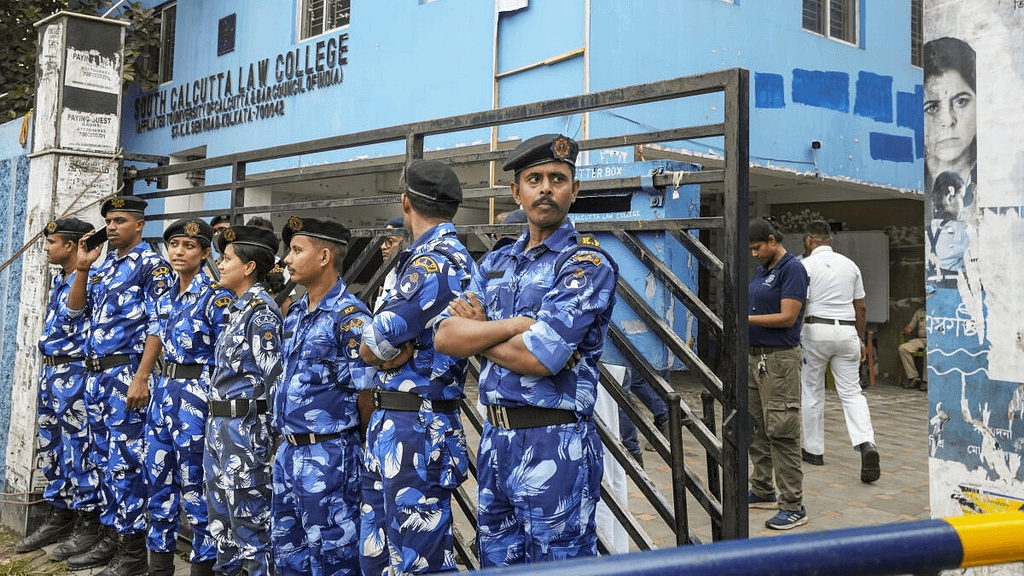
The crime took place inside campus, by individuals with privileged access (alumnus, staff, guard). This reveals serious security lapses in law college premises.
b. Administrative Role & Past Precedence
Parallels are being drawn with the RG Kar Medical College horrific rape‑murder of a junior doctor in 2024. In that case, criticisms were aimed at inadequate policing, institutional negligence, and media leaks complicating the investigation m.economictimes.comtimesofindia.indiatimes.com+4hindustantimes.com+4economictimes.indiatimes.com+4timesofindia.indiatimes.com+5en.wikipedia.org+5hindustantimes.com+5.
c. Student & Faculty Response
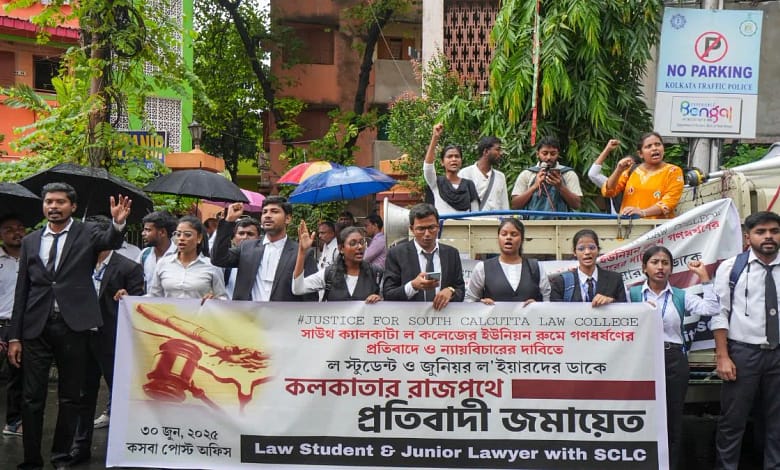
Outrage erupted across the state: law students, junior lawyers, and faculty groups protested, demanding justice, improved campus security, fast investigations, and survivor support. A representative council held placards reading “Campus Must Be Safe” and “Justice Now” (PTI photos) .
d. Policy Reforms
This incident reignites calls for:
- Stricter vetting of campus staff and visitors
- Regular safety audits and incident reporting mechanisms
- Installation of CCTV in isolated areas
- Establishment of gender-sensitized support teams on all campuses
West Bengal’s “Aparajita Woman & Child Bill” passed in late 2024, similarly aims to strengthen investigation timelines, institute female-led task forces, and impose harsher punishments for sexual offences en.wikipedia.org.
5. Political Fallout & Public Reaction
a. BJP vs TMC
- BJP criticized the state government’s alleged inaction and demanded the resignation of CM Mamata Banerjee timesofindia.indiatimes.com+1timesofindia.indiatimes.com+1.
- TMC, conversely, affirmed the swift police response and said they would pursue justice hindustantimes.com+11youtube.com+11timesofindia.indiatimes.com+11.
Political polarization continues to intensify around law and order narratives.
b. Role of NCW & Civil Society
The National Commission for Women took cognizance of the matter, calling for stringent investigation and victim protection livemint.comtelegraphindia.com+3en.wikipedia.org+3timesofindia.indiatimes.com+3. Social activists and survivor groups urged media to refrain from sensationalism and honor legal confidentiality.
6. Evidence, Forensics & the Investigation
a. DNA & Physical Evidence
Blood, bodily fluids, hair, and forensic materials were collected from crime scenes and samples from all accused were taken at Calcutta Medical College m.economictimes.com+2livemint.com+2hindustantimes.com+2.
b. Video Footage
A graphic 1.5‑minute video was recovered from Mishra’s phone. Investigators are exploring its distribution to build a networked liability .
c. Injury Patterns
Doctored evidence indicated scratch marks—suggesting physical resistance .
d. Chain of Custody & Backup
The integrity of evidence collection—especially from multiple sites—is being preserved via police procedural protocols, including sample logging and secure chain-of-custody measures.
7. Legal Path Forward
a. Charges Faced Under IPC
Likely charges include:
- Section 376D: Gang rape, carrying life imprisonment
- Section 120B: Criminal conspiracy (if planning is proved)
- IPC 228A: Penal provisions if identity leaks occur
b. Court & Investigation Trajectory
- Chargesheet to be filed upon forensic results.
- Accused could be held in judicial custody pending trial.
- Survivor protection measures—like testimony from behind screens—may be employed.
- Video evidence could significantly bolster prosecution.
c. Victim Rights & Shield Laws
Under the Protection of Children from Sexual Offences (POCSO) Act and rulings like Bachpan Bachao Andolan v. Union of India, courts must maintain confidentiality. Violation may result in contempt and personal liability for media or individuals.
d. Precedents from Past Cases
- The 2012 Delhi Nirbhaya case triggered legal reforms.
- The 2024 RG Kar incident led to Supreme Court action and a new task force x.com+15en.wikipedia.org+15livemint.com+15hindustantimes.comlivemint.comen.wikipedia.org.
- Kolkata Police’s consistency will likely shape public faith.
8. Historical Echoes & Societal Significance
a. Patterns in Campus Sexual Violence
This is not an isolated incident; campuses across India have faced similar scandals—from St. Stephen’s to IITs. Each time, weak institutional controls have been scrutinized.
b. Media’s Role
Responsible reporting is key. Mishandling of identity details in previous cases led to re-victimization. Press self-regulation and judicial oversight are essential.
c. Survivor Support & Stigma
Beyond the courtroom, survivors face societal backlash. Psychological counseling, academic accommodations, and anti-stigma campaigns are necessary support structures.
d. Gender Equality & Cultural Change
Such cases highlight the urgent need for systemic policy reform, stereotyping eradication, and promotion of respectful gender dialogue from early education onwards.
9. Comparisons with Past Landmark Cases
| Case | Location & Date | Outcome / Impact |
|---|---|---|
| 2012 Nirbhaya (Delhi) | Major public uproar; execution of perpetrators. | NPC/TSC reforms, fast‑track courts. |
| 2015 Park Street (Kolkata) | Survivor Suzette Jordan challenged stigma. | Highlighted urban violence & media bias en.wikipedia.org+1hindustantimes.com+1en.wikipedia.org. |
| 2024 RG Kar (Kolkata) | Rape‑murder of doctor | Led to SC‑appointed task forces . |
| 2025 Kasba Law College | Survivor is still on campus, video evidence recovered. | Current scenario; yet another flashpoint for campus safety. |
10. Broader Takeaways & Recommendations
- Robust Campus Security
- Regular audits, CCTV in isolated areas
- Training of security staff and better access monitoring
- Legal Safeguards
- Strict enforcement of IPC 228A
- Fast-track processes and witness protection
- Media Responsibility
- Strengthen press council norms, avoid unverified leaks
- Survivor-Friendly Systems
- Counseling, academic leniency, dedicated response teams
- Legal Education & Empowerment
- Law Colleges should teach consent, ethical leadership
- Policy Reform
- Reinforce task forces, enforce punishment timelines
- Cultural Shift
- Introduce gender equality and respectful behavior from root levels
Conclusion
The Kasba law college gang-rape case is a stark reminder that sexual violence can strike even places of learning. The gravity of the allegations, video evidence, and police observations position this as a case of national concern. Kolkata Police’s stern warning against revealing the survivor’s identity underscores the fragile balance between justice and rights protection.
As forensic teams piece together vital evidence, public focus must remain on survivor support, media ethics, institutional accountability, and societal awareness. The path forward requires not only legal action but also cultural awakening—ensuring educational institutions are truly safe havens.