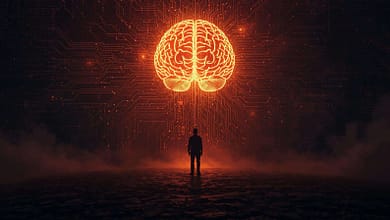
Did you know that artificial intelligence is projected to contribute over $15 trillion to the global economy by 2030? This staggering figure highlights the profound impact AI technology is having across various industries. From revolutionizing healthcare with predictive analytics to transforming transportation with autonomous vehicles, machine learning is at the forefront of innovation.
As AI continues to evolve, it’s changing the way we live and work. With its ability to analyze vast amounts of data, AI is helping businesses make informed decisions, improve efficiency, and drive growth. The ai impact is undeniable, and understanding its potential is crucial for navigating the future.
Key Takeaways
- Artificial intelligence is projected to significantly boost the global economy.
- AI technology is revolutionizing various industries, including healthcare and transportation.
- Machine learning is driving innovation and improving business efficiency.
- Understanding AI’s potential is crucial for future success.
- AI’s impact on our daily lives and work is profound and far-reaching.
The Evolution of Artificial Intelligence
From the realms of science fiction to the forefront of technological innovation, artificial intelligence has come a long way. The concept of AI has fascinated humans for decades, and its evolution has been nothing short of remarkable.
From Science Fiction to Reality
The journey of AI began in the realm of science fiction, where it was often depicted as a futuristic concept. However, as technology advanced, AI transitioned from fiction to reality. The development of AI algorithms and the increase in computational power have been crucial in this transition.
Key Milestones in AI Development
Several key milestones have marked the evolution of AI. The development of machine learning and deep learning techniques has enabled AI systems to learn from data and improve over time.
| Year | Milestone | Description |
|---|---|---|
| 1950 | Turing Test | Alan Turing proposed a measure of a machine’s ability to exhibit intelligent behavior. |
| 1980s | Expert Systems | AI development focused on expert systems that mimicked human decision-making. |
| 2010s | Deep Learning | The resurgence of deep learning techniques led to significant advancements in AI capabilities. |
The artificial intelligence evolution is a testament to human ingenuity and the relentless pursuit of technological innovation. As AI continues to advance, it is poised to revolutionize numerous aspects of our lives.
Understanding the Fundamentals of AI Technology
At the heart of AI are several critical components that work together to create intelligent systems capable of complex tasks. These components are crucial for the development and advancement of AI technology.
Machine Learning: The Engine of Modern AI
Machine learning is a subset of AI that involves training algorithms to learn from data and make predictions or decisions without being explicitly programmed. This technology is fundamental to many AI applications, enabling systems to improve their performance over time based on experience.
Machine Learning: The Engine of Modern AI
It allows for the analysis of large datasets, identifying patterns that may not be apparent to human analysts. By leveraging machine learning, businesses can gain insights into customer behavior, optimize operations, and develop more effective marketing strategies.
Deep Learning and Neural Networks
Deep learning, a subset of machine learning, utilizes neural networks to analyze complex data sets. Inspired by the structure and function of the human brain, these networks are composed of layers of interconnected nodes or “neurons” that process and transmit information.

Natural Language Processing and Computer Vision
Natural Language Processing (NLP) enables computers to understand, interpret, and generate human language, facilitating applications such as chatbots, language translation, and text summarization. Meanwhile, computer vision allows machines to interpret and understand visual information from the world, enabling applications like image recognition, object detection, and autonomous vehicles.
Together, these technologies form the backbone of modern AI, driving innovation and transforming industries through data analytics solutions and beyond.
Unlocking the Power of AI: How Artificial Intelligence is Changing Our World
Artificial Intelligence (AI) is revolutionizing the world at an unprecedented pace. As we continue to unlock the power of AI, its impact is being felt across various sectors, transforming the way we live and work.
The Current State of AI Implementation
The current state of AI implementation is characterized by significant advancements in machine learning, natural language processing, and computer vision. AI technologies are being integrated into various industries, enhancing operational efficiency and driving innovation. For instance, AI-powered chatbots are being used to improve customer service, while predictive analytics is helping businesses make informed decisions.
According to a recent report, the global AI market is expected to grow exponentially in the next few years, with AI adoption becoming increasingly prevalent across industries. As AI continues to evolve, we can expect to see even more innovative applications.
The Transformative Potential Across Industries
The transformative potential of AI across industries is vast. From healthcare to finance, AI is being used to drive significant improvements. In healthcare, AI is being used to diagnose diseases more accurately and develop personalized treatment plans. In finance, AI-powered systems are helping to detect fraud and enhance security.
| Industry | AI Application | Benefit |
|---|---|---|
| Healthcare | Diagnostic Tools | Improved Accuracy |
| Finance | Fraud Detection | Enhanced Security |
| Retail | Personalized Marketing | Increased Sales |
As highlighted by industry experts, “AI has the potential to revolutionize the way businesses operate and create new opportunities for growth.” As we move forward, it’s clear that AI will play an increasingly important role in shaping our world.
“The future of AI is not just about technological advancements; it’s about creating a better world for everyone.”
AI in Healthcare: Revolutionizing Patient Care
AI’s impact on healthcare is profound, enhancing patient outcomes and streamlining clinical workflows. The integration of artificial intelligence is transforming various aspects of healthcare, from diagnosis and treatment to medical research and patient monitoring.
Diagnostic and Treatment Innovations
The use of AI in diagnostic and treatment processes is revolutionizing healthcare. AI-powered technologies are improving the accuracy and speed of diagnoses, enabling healthcare professionals to provide more effective treatments.
AI-Powered Medical Imaging
AI-powered medical imaging is enhancing diagnostic capabilities. AI algorithms can analyze medical images such as X-rays and MRIs, helping doctors detect abnormalities more accurately and quickly.
Virtual Health Assistants
Virtual health assistants are another innovation, providing patients with personalized care and support. These AI-driven assistants can monitor patient conditions, offer medication reminders, and facilitate communication with healthcare providers.
Medical Research and Drug Development
AI is also accelerating medical research and drug development. By analyzing vast amounts of data, AI can identify potential drug candidates and predict their efficacy, significantly reducing the time and cost associated with bringing new treatments to market.
| Application | Benefits |
|---|---|
| AI-Powered Medical Imaging | Enhanced diagnostic accuracy and speed |
| Virtual Health Assistants | Personalized patient care and support |
| Medical Research and Drug Development | Accelerated discovery and reduced costs |
Personalized Medicine and Patient Monitoring
Personalized medicine is becoming more prevalent with AI’s ability to analyze individual patient data, enabling tailored treatment plans. Additionally, AI-driven patient monitoring systems can continuously track patient health, providing real-time insights to healthcare providers.

AI in Business and Industry
AI is transforming the business landscape by enhancing operational efficiency, improving customer experiences, and enabling data-driven decision-making. As companies continue to adopt AI technologies, they are witnessing significant improvements across various aspects of their operations.
Automation and Efficiency Improvements
The integration of AI in business processes has led to substantial automation and efficiency gains. By leveraging machine learning algorithms and robotic process automation, companies can streamline their operations, reduce manual errors, and lower operational costs. For instance, AI-powered chatbots are being used to handle customer inquiries, freeing up human resources for more complex tasks.

Customer Experience and Personalization
AI is also revolutionizing customer experience by enabling businesses to offer personalized services and products. Through the analysis of customer data, AI systems can predict consumer behavior, tailor recommendations, and improve overall customer satisfaction. Companies like Amazon and Netflix are already using AI to provide personalized experiences, setting a new standard for customer engagement.
Predictive Analytics and Decision Making
Predictive analytics is another area where AI is making a significant impact. By analyzing historical data and real-time market trends, AI-powered predictive models can forecast future events, enabling businesses to make informed decisions. This capability is particularly valuable in industries such as finance, healthcare, and supply chain management, where accurate predictions can lead to substantial cost savings and competitive advantages.
| Industry | AI Application | Benefit |
|---|---|---|
| Manufacturing | Predictive Maintenance | Reduced Downtime |
| Finance | Risk Analysis | Improved Risk Management |
| Retail | Personalized Marketing | Increased Sales |
AI in Education: Transforming Learning Experiences
Education is undergoing a paradigm shift with the incorporation of AI technologies. The traditional one-size-fits-all approach to learning is being replaced by more personalized and adaptive methods.
Personalized learning is one of the key benefits of AI in education. AI systems can analyze student performance and learning patterns to create customized learning paths.
Personalized Learning Paths and Adaptive Content
AI-driven adaptive content adjusts to the individual student’s needs, pace, and learning style. This ensures that students are neither left behind nor held back by a pace that is too slow.
- AI-powered adaptive learning systems
- Customized educational content
- Enhanced student engagement
Administrative Efficiency and Educational Access
AI is also improving administrative efficiency in educational institutions. Automating tasks such as grading, admissions, and enrollment processes frees up staff to focus on more critical tasks.
| Administrative Task | Pre-AI Process | Post-AI Process |
|---|---|---|
| Grading | Manual grading by teachers | Automated grading systems |
| Admissions | Manual processing of applications | AI-driven application screening |

The Role of AI in Environmental Sustainability
Emerging AI technologies are revolutionizing environmental sustainability efforts by providing innovative solutions to complex ecological challenges. The integration of AI in environmental sustainability is transforming the way we approach climate modeling, resource management, and conservation.

Climate Modeling and Prediction
AI is significantly enhancing climate modeling and prediction capabilities. By analyzing vast amounts of data, AI algorithms can identify patterns and predict future climate changes more accurately than traditional models. This enables policymakers and scientists to develop more effective strategies for mitigating the impacts of climate change.
“AI has the potential to revolutionize our understanding of the climate system and inform decision-making at scale.”
Resource Management and Conservation Efforts
AI is also being applied to improve resource management and conservation efforts. For instance, AI-powered monitoring systems can track deforestation, detect wildlife poaching, and optimize water resource management. These applications not only help in conserving natural resources but also support sustainable development.
| Application | Description | Impact |
|---|---|---|
| Climate Modeling | AI analyzes data to predict climate changes | Enhanced accuracy in climate predictions |
| Deforestation Monitoring | AI-powered systems track forest cover changes | Timely intervention to prevent deforestation |
| Wildlife Conservation | AI detects poaching activities | Protection of endangered species |
By leveraging AI in environmental sustainability, we can create a more sustainable future. The potential of AI to drive positive change is vast, and its applications in climate modeling, resource management, and conservation efforts are just the beginning.
Ethical Considerations and Challenges of AI
With AI becoming increasingly integral to our daily lives, understanding its ethical dimensions is more important than ever. As AI technologies advance, they bring with them a host of ethical considerations and challenges that must be addressed to ensure their benefits are realized without causing undue harm.
Privacy and Data Security Concerns
One of the significant ethical challenges associated with AI is the issue of privacy and data security. AI systems rely heavily on vast amounts of data, often including personal and sensitive information. Ensuring that this data is handled securely and with respect for individual privacy is paramount. Data protection regulations and privacy by design principles are critical in mitigating these risks.
Bias and Fairness in AI Systems
Another ethical consideration is the potential for bias in AI systems. Bias can arise from various sources, including the data used to train AI models and the algorithms themselves. Addressing this issue requires a multifaceted approach.
Addressing Algorithmic Bias
To tackle algorithmic bias, developers must carefully curate training data and implement bias detection and mitigation techniques. Regular audits of AI systems can also help identify and rectify bias.
Ensuring Inclusive AI Development
Ensuring that AI development teams are diverse and inclusive can also help mitigate bias, as a broader range of perspectives can lead to more equitable AI systems.
Job Displacement and Economic Impact
The economic impact of AI, particularly job displacement, is a significant concern. While AI has the potential to automate certain tasks, it also creates new job opportunities in fields related to AI development, deployment, and maintenance. Economic policies and retraining programs will be essential in managing the transition and minimizing disruption.

As AI continues to evolve, it’s crucial that we address these ethical considerations and challenges proactively. By doing so, we can ensure that AI technologies are developed and used in ways that benefit society as a whole.
The Future Landscape of AI Technology
AI technology is on the cusp of a new era, driven by advancements in quantum computing and IoT integration. As we look ahead, it’s clear that the future of AI will be shaped by several emerging trends and innovations.
Emerging Trends and Innovations
The field of AI is rapidly evolving, with several key areas showing significant promise. Two of the most exciting developments are the integration of quantum computing with AI and the convergence of AI with the Internet of Things (IoT).
Quantum Computing and AI
Quantum computing has the potential to revolutionize AI by providing the computational power needed to solve complex problems that are currently unsolvable. This could lead to breakthroughs in areas such as drug discovery and climate modeling. For instance, quantum computers can simulate complex molecular interactions, accelerating the discovery of new medicines.
AI and Internet of Things Integration
The integration of AI with IoT devices is creating a more interconnected world. This convergence enables the creation of smart environments that can adapt to user needs, enhancing efficiency and convenience. For example, in smart homes, AI can optimize energy consumption by learning occupants’ habits and adjusting lighting and temperature accordingly.
Predictions for the Next Decade
Over the next decade, we can expect AI to become even more pervasive across various industries. Here are some key predictions:
- AI will continue to enhance customer experiences through personalized services.
- The use of AI in healthcare will lead to more accurate diagnoses and effective treatments.
- AI-driven automation will transform industries, improving efficiency and productivity.
The future of AI holds much promise, but it also comes with challenges. As AI technologies advance, it’s crucial to address ethical considerations and ensure that the benefits are equitably distributed.
| Trend | Impact | Timeline |
|---|---|---|
| Quantum AI | Breakthroughs in complex problem-solving | 5-7 years |
| AI-IoT Integration | Smart environments and enhanced user experiences | 3-5 years |
| AI in Healthcare | Improved diagnostics and personalized medicine | 2-4 years |

As we move forward, the landscape of AI technology will continue to evolve, bringing about significant changes in various aspects of our lives. By understanding these emerging trends and innovations, we can better prepare for the future and harness the potential of AI.
Preparing for an AI-Driven World
Preparing for an AI-driven world requires a multifaceted approach that encompasses both the workforce and governance structures. As AI continues to transform industries and societal norms, it’s essential to equip ourselves with the necessary tools and frameworks to navigate this change effectively.

Skills for the Future Workforce
The future workforce will need to adapt to an environment where AI is increasingly prevalent. This involves developing skills that complement AI, such as critical thinking, creativity, and emotional intelligence. Educational institutions and organizations must work together to provide training programs that focus on these areas, ensuring that the workforce remains relevant in an AI-driven economy.
Moreover, continuous learning will become a norm, as professionals will need to update their skills regularly to keep pace with technological advancements. This shift towards a more dynamic workforce requires a culture that values adaptability and innovation.
Policy and Governance Frameworks
Effective policy and governance frameworks are crucial for managing the impact of AI on society. Policymakers must develop regulations that encourage innovation while protecting citizens’ rights and privacy. This includes addressing issues related to bias in AI systems, data security, and the ethical use of AI.
Furthermore, international cooperation will be essential in establishing global standards for AI governance. By working together, countries can create a cohesive framework that supports the responsible development and deployment of AI technologies.
Conclusion
As we’ve explored throughout this article, the impact of artificial intelligence on our world is profound and far-reaching. From revolutionizing healthcare and education to transforming industries and driving environmental sustainability, AI is reshaping the future.
The future of AI holds much promise, with machine learning advancements and data analytics playing a crucial role in shaping our world. As AI continues to evolve, its potential to drive positive change is vast. Understanding the ai impact and embracing the ai revolution will be key to unlocking new opportunities and addressing the challenges that lie ahead.
As we move forward, it’s essential to be aware of the potential implications of AI and work together to ensure its development and deployment are aligned with human values. By doing so, we can harness the power of AI to create a brighter future for all, driven by the continued advancements in machine learning and data analytics.
FAQ
What is Artificial Intelligence (AI) and how is it changing our world?
Artificial Intelligence refers to the development of computer systems that can perform tasks that typically require human intelligence, such as learning, problem-solving, and decision-making. AI is transforming our world by revolutionizing industries, improving efficiency, and enabling new technologies.
How is AI being used in healthcare?
AI is being used in healthcare to improve diagnosis, treatment, and patient care. AI-powered medical imaging can help doctors detect diseases more accurately, while virtual health assistants can provide patients with personalized support and guidance.
What are the benefits of AI in business and industry?
AI is being used in business and industry to improve automation, customer experience, and predictive analytics. AI can help companies streamline processes, make better decisions, and drive innovation.
How is AI impacting education?
AI is transforming education by enabling personalized learning paths, improving administrative efficiency, and enhancing educational access. AI-powered adaptive learning systems can help students learn more effectively, while AI-powered tools can help teachers with grading and other administrative tasks.
What are the ethical considerations and challenges associated with AI?
The development and deployment of AI raise several ethical considerations and challenges, including concerns around privacy, bias, and job displacement. Ensuring that AI systems are transparent, fair, and secure is crucial to mitigating these risks.
What is the future of AI technology?
The future of AI technology is expected to be shaped by emerging trends and innovations, including quantum computing and AI-IoT integration. As AI continues to evolve, we can expect to see significant advancements in areas like machine learning, natural language processing, and computer vision.
How can we prepare for an AI-driven world?
Preparing for an AI-driven world requires a focus on developing the skills needed for the future workforce, as well as establishing effective policy and governance frameworks. This includes investing in education and training programs, as well as ensuring that AI systems are designed and deployed responsibly.
What is the role of machine learning in AI?
Machine learning is a key component of AI, enabling systems to learn from data and improve their performance over time. Machine learning is being used in a wide range of applications, from image recognition and natural language processing to predictive analytics and decision-making.
How is AI being used in environmental sustainability?
AI is being used in environmental sustainability to improve climate modeling, resource management, and conservation efforts. AI-powered systems can help analyze data, identify patterns, and make predictions, enabling more effective decision-making and action.
What are the potential risks and benefits of AI advancements?
The potential benefits of AI advancements include improved efficiency, productivity, and innovation, as well as the potential to address some of the world’s most pressing challenges. However, there are also potential risks associated with AI, including job displacement, bias, and security concerns.